
 FA+
FA+ Shop
Shop
266
Views
Views
10
Favorites
Favorites
Category
All / All
Species Unspecified / Any
Size 1844 x 1864
File Size 2.23 MB
Report this content
More from Tallarra


Listed in Folders

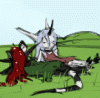
a maiden knows not the pain of rejection..
Category All / All
Species Unspecified / Any
Size 1844 x 1864px
File Size 2.23 MB
Listed in Folders


Through the swaying meadow grass, where the golden light of afternoon doth dance in playful flickers, there wandered a bard, his cloak tattered by the roads he had known, his boots kissed by the dust of a hundred paths untold. A lute of sorts lay slung upon his back, its strings whispering soft against the wind, and his eyes, bright as laughing embers, took in the field with wonder.
And when he beheld the maidens, he did halt his steps and press a hand o’er his heart, as though the very sight of them had loosed from his breast some breath he had not known he was holding.
“Hail, fair spirits of the sunlit meadow! Be ye visions conjured from nature’s dream, or flesh and blood as wandering hearts like mine?"
The first maiden, yet turned away, durst not respond to him. The second maiden, brow raised with curiosity, stepped forth and said, "Good sir, if thou hast come to pry us from our meadow with promises of distant kingdoms, or with trinkets or treasures or troves, save thy breath and go thy way, for we are not easily swayed from this our place."
The bard laughed, a sound as light and careless as the murmuring brook. "Nay, gentle maidens, I come not to steal thee hence, nor do I bear summons of kings or lords. My only errand is that of the heart, to rest my weary feet where the land is fair, and to drink deep of beauty before time doth call me yonder."
He unslung his lute, but did not pluck from it a melody, rather he did carry it as though a weighty burden of lands afar. “If it please thee, might I tarry in thy field, to while away an hour in the golden embrace of this gentle land? To lay upon the grass, to hear the whisper of the wind, and, if fortune be kind, to bask in the fairest sight of all—a meadow in bloom, and its maidens at peace?"
The first maiden turned at last, fixing him with a gaze measured and keen. "And when the sun doth set, wilt thou seek to claim this field for thy own, or woo us with silver-tongued sonnets?"
The bard gave a roguish yet languid smile. "Nay, sweet lady, I am but a traveler, and a traveler knows better than to lay claim to the wind. Yet though my feet must wander, let it be known that ne'er shall my heart forget this day, nor the fair blossoms I beheld upon it."
At this, the second maiden did tilt her head. "Then sit thee down, wayward minstrel. Strum not thy songs, weave thee no verses, and speak no more of things that lie beyond yonder hills of the meadow."
And so the bard did sit among the wildflowers, to hear the music of the rustling of the grass, his voice stolen off as though upon the breeze. And though he knew he would not pass this way again, he was content, for beauty need not be possessed to be cherished.
The afternoon stretched golden and unhurried, a moment untouched by the world beyond the tall grasses.
But as the sun dipped low, spilling amber and rose across the rolling hills, the bard did rise, shaking loose the petals the mischievous breeze had gathered in the folds of his tunic. He placed a hand o’er his heart and bowed, his smile both wistful and warm. "Fair maidens, the road calls me hence, as it calls all wanderers in time. But though my feet must tread another path, know this, I shall carry the memory of this day as one carries a cherished song, humming it softly beneath their breath, and ne'er truly leaving it behind."
And with that, he turned, striding away through the tall grasses, each step parting the wildflowers as though the meadow itself whispered farewell. His lute lay slung once more across his shoulder, its strings humming softly with the memory of his touch. As he walked, he plucked a tune refreshed, light as the evening breeze, fleeting as the last golden rays upon the hills, and lost among the murmurs of the wind and the gentle sigh of the meadow settling into dusk.
And when he beheld the maidens, he did halt his steps and press a hand o’er his heart, as though the very sight of them had loosed from his breast some breath he had not known he was holding.
“Hail, fair spirits of the sunlit meadow! Be ye visions conjured from nature’s dream, or flesh and blood as wandering hearts like mine?"
The first maiden, yet turned away, durst not respond to him. The second maiden, brow raised with curiosity, stepped forth and said, "Good sir, if thou hast come to pry us from our meadow with promises of distant kingdoms, or with trinkets or treasures or troves, save thy breath and go thy way, for we are not easily swayed from this our place."
The bard laughed, a sound as light and careless as the murmuring brook. "Nay, gentle maidens, I come not to steal thee hence, nor do I bear summons of kings or lords. My only errand is that of the heart, to rest my weary feet where the land is fair, and to drink deep of beauty before time doth call me yonder."
He unslung his lute, but did not pluck from it a melody, rather he did carry it as though a weighty burden of lands afar. “If it please thee, might I tarry in thy field, to while away an hour in the golden embrace of this gentle land? To lay upon the grass, to hear the whisper of the wind, and, if fortune be kind, to bask in the fairest sight of all—a meadow in bloom, and its maidens at peace?"
The first maiden turned at last, fixing him with a gaze measured and keen. "And when the sun doth set, wilt thou seek to claim this field for thy own, or woo us with silver-tongued sonnets?"
The bard gave a roguish yet languid smile. "Nay, sweet lady, I am but a traveler, and a traveler knows better than to lay claim to the wind. Yet though my feet must wander, let it be known that ne'er shall my heart forget this day, nor the fair blossoms I beheld upon it."
At this, the second maiden did tilt her head. "Then sit thee down, wayward minstrel. Strum not thy songs, weave thee no verses, and speak no more of things that lie beyond yonder hills of the meadow."
And so the bard did sit among the wildflowers, to hear the music of the rustling of the grass, his voice stolen off as though upon the breeze. And though he knew he would not pass this way again, he was content, for beauty need not be possessed to be cherished.
The afternoon stretched golden and unhurried, a moment untouched by the world beyond the tall grasses.
But as the sun dipped low, spilling amber and rose across the rolling hills, the bard did rise, shaking loose the petals the mischievous breeze had gathered in the folds of his tunic. He placed a hand o’er his heart and bowed, his smile both wistful and warm. "Fair maidens, the road calls me hence, as it calls all wanderers in time. But though my feet must tread another path, know this, I shall carry the memory of this day as one carries a cherished song, humming it softly beneath their breath, and ne'er truly leaving it behind."
And with that, he turned, striding away through the tall grasses, each step parting the wildflowers as though the meadow itself whispered farewell. His lute lay slung once more across his shoulder, its strings humming softly with the memory of his touch. As he walked, he plucked a tune refreshed, light as the evening breeze, fleeting as the last golden rays upon the hills, and lost among the murmurs of the wind and the gentle sigh of the meadow settling into dusk.

Comments