
 FA+
FA+ Shop
Shop
249
Views
Views
19
Favorites
Favorites
Category
Artwork (Digital) / Doodle
Species Snake / Serpent
Size 1024 x 768
File Size 310 kB
Report this content
More from Excess-0


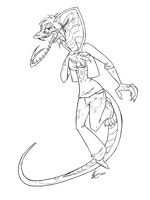


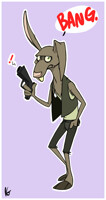


Doodles of my green tree python, Bitey. He's adorable, and I love drawing him.
Category Artwork (Digital) / Doodle
Species Snake / Serpent
Size 1024 x 768px
File Size 310 kB


That's... really crude of you. This is my pet. Like... a personal pet that exists in real life. Not a fictional character. He's also a baby, no less.
I'm sure you didn't mean any offense, but this is not adult art, and my pet snake is not intended for that kind of... thing. Please try to reserve those kinds of comments for fictional characters, or where it is otherwise appropriate.
Thank you.
I'm sure you didn't mean any offense, but this is not adult art, and my pet snake is not intended for that kind of... thing. Please try to reserve those kinds of comments for fictional characters, or where it is otherwise appropriate.
Thank you.

here: http://www.furaffinity.net/user/narse/
Narse is easily one of the most popular artists, when it comes to dragons.
Narse is easily one of the most popular artists, when it comes to dragons.

Oh awesome! I think a lot of people struggle with them because of their disposition and environmental needs. I know I have difficulty with the humidity in the winter, and constipation at times as well. They're a fragile species... it often seems like the odds are stacked against them even in captivity. I plan to buy a fogger, and I'm hoping that will drastically improve the consistency of the humidity levels, as well as aiding the constipation issues, since I think humidity is at the core of that problem as well.
If that isn't enough to turn off most keepers, their moodiness and unpredictability is usually enough. I am able to handle mine, or at least touch him, most of the time. But his feeding response is such that if it's too close to feeding day, or it's dark, he'll bite at anything that has a heat signature and moves close enough. He also has his moody days, and he has a strong mistrust of most other people. He's particular about how he is handled. Of course, even if I take him out, I have to be careful not to stress his spine, and return him soon enough that he doesn't suffer from the dryness or temperature changes.
They are my absolute favourite species, but I completely understand why more people don't do well with them. Plus, a quality animal is very expensive! Most people can't justify paying that much for a snake that isn't a special colour mutation.
How do you do with yours?
If that isn't enough to turn off most keepers, their moodiness and unpredictability is usually enough. I am able to handle mine, or at least touch him, most of the time. But his feeding response is such that if it's too close to feeding day, or it's dark, he'll bite at anything that has a heat signature and moves close enough. He also has his moody days, and he has a strong mistrust of most other people. He's particular about how he is handled. Of course, even if I take him out, I have to be careful not to stress his spine, and return him soon enough that he doesn't suffer from the dryness or temperature changes.
They are my absolute favourite species, but I completely understand why more people don't do well with them. Plus, a quality animal is very expensive! Most people can't justify paying that much for a snake that isn't a special colour mutation.
How do you do with yours?
The first one I bought was an adult already, and I had a horrible experience with it. I bought it with the enclosure that it was already living in, which was a sufficient enclosure for this species, but it did not eat (or drink most likely) for 6 months and then died. That experience pretty much solidified everything I heard about them being a difficult species, but I tried again with a captive bred baby from a quality breeder, and it has caused me no problems whatsoever. She is going on 4 years old now, and she's never had a stuck shed, constipation, feeding issues, anything. I have some experience breeding snakes, so I have rack set ups, which aren't easy on the eyes, but they do most definitely offer a very easy enclosure for providing a good amount of humidity, warmth, and shelter. Snakes that dehydrate quickly do extremely well in rack set ups if your set up is going to be simple. If you describe your enclosure to me I may be able to help you raise your humidity. At almost 4 years old, my girl now lives in one of those tall exo-terra terrariums. I use cypress mulch for the bedding, and she gets her heat from an under tank heater, but instead of sticking it to the bottom of the tank, I actually have it placed above. It sits on top of the screen lid, and then I have a cut of plywood that covers the majority of the screen lid. This helps with humidity and also insulates the heat so that it will direct downward toward the inside of the enclosure. I also have a towel draped across the top of the tank that comes down the sides about halfway, to make it seem a bit more secure and not so out in the open. I do think this species has special needs compared to something like a corn snake or a boa, but I wouldn't say that they should be much more difficult than a ball python or a blood python, all of these species require some humidity which cannot be achieved with an open-top (screened) enclosure.
I would be inclined to agree. I could stand to get a rack set up, as the ExoTerra I have him in now is not really sufficient when it comes to insulating. I have the top covered, but I live in Ontario, and my place is cold in the winter, hot in the summer, and too dry for most of the year. I mist him regularly, and the humidity will REACH a high enough level, but it falls too quickly. Even with multiple water dishes kept full, one of which is on top of the UTH. Especially during the day when the lamp is on, it dries too fast in there. I have never tried putting an UTH on top of the tank, that's a very new idea to me. I have thought to remove the lamp, but I need it to maintain a high enough temperature, especially in the winter.
His tank now is bigger than it was, too. His old tank was much smaller, and easily held higher humidity levels for longer periods of time. It was just generally easier to maintain levels consistently. It's a shame, because he never had constipation or shedding issues until I switched to the new tank set up, and moved to this place. The combination of the two has just made it a nightmare to maintain him. Though he eats incredibly well and never seems stressed.
My goal with him is to live plant the enclosure(a skill I have finally managed to gain), and get a fogger. Since I can't afford to start a rack at the moment. I expect that should solve the problem. But I completely welcome your suggestions!
My room temperature levels are 21C during the day, 20 at night. Humidity floats between 30 and 40%, sometimes lower. In the summer it goes as high as 50%.
The cage temps are 90-95F on the hot spot, 70-80F on the cool side, with a night time drop to 70F all around.
Cage humidity has a peak of 90% but drops drastically very quickly. I'm lucky if I can get it to float at 50% for a few hours a night, the rest of the time it is somewhere between 30-40%, which is just completely unacceptable. It isn't high enough. I'm trying to get it to stay around 60-70% most of the time, with a peak of 90% each night for an hour, slowly declining back down to 60% by morning.
His tank now is bigger than it was, too. His old tank was much smaller, and easily held higher humidity levels for longer periods of time. It was just generally easier to maintain levels consistently. It's a shame, because he never had constipation or shedding issues until I switched to the new tank set up, and moved to this place. The combination of the two has just made it a nightmare to maintain him. Though he eats incredibly well and never seems stressed.
My goal with him is to live plant the enclosure(a skill I have finally managed to gain), and get a fogger. Since I can't afford to start a rack at the moment. I expect that should solve the problem. But I completely welcome your suggestions!
My room temperature levels are 21C during the day, 20 at night. Humidity floats between 30 and 40%, sometimes lower. In the summer it goes as high as 50%.
The cage temps are 90-95F on the hot spot, 70-80F on the cool side, with a night time drop to 70F all around.
Cage humidity has a peak of 90% but drops drastically very quickly. I'm lucky if I can get it to float at 50% for a few hours a night, the rest of the time it is somewhere between 30-40%, which is just completely unacceptable. It isn't high enough. I'm trying to get it to stay around 60-70% most of the time, with a peak of 90% each night for an hour, slowly declining back down to 60% by morning.
I would recommend holding off on the mister and replacing the lamp with an under tank heater above like I have on my cage, but you will need some insulation to direct the heat downward. You can also try adding an under tank heater to the side glass so that he can sit close to it when he is on the perch, but again, I'd think of a way to insulate the heat inward. Something like this type of product could be good for this: http://image.made-in-china.com/2f0j.....tion-Film.jpg. I do recommend the live plants, but the fogger may cause you some problems with mold. If you decide to go with the fogger, you will need to let the cage dry out daily. Humidity is different than a wet cage, you probably know this.
My room temperature is the same as yours or lower in the winter. I don't have a heater in my room but I live in the south, so it probably gets around 10C at the lowest. I don't do night drops and I am pretty sure my basking spot is lower than yours. Using a heat lamp will most definitely dry out the air. Keeping your basking spot high will dehydrate your snake faster because his metabolism is going faster at that temp. It's quite interesting how all of these factors relate to each other. I think one of the main reasons that my green tree python is so low maintenance is because I keep her basking spot at a moderate temperature, likely around 31C.
My room temperature is the same as yours or lower in the winter. I don't have a heater in my room but I live in the south, so it probably gets around 10C at the lowest. I don't do night drops and I am pretty sure my basking spot is lower than yours. Using a heat lamp will most definitely dry out the air. Keeping your basking spot high will dehydrate your snake faster because his metabolism is going faster at that temp. It's quite interesting how all of these factors relate to each other. I think one of the main reasons that my green tree python is so low maintenance is because I keep her basking spot at a moderate temperature, likely around 31C.


Comments