
 FA+
FA+ Shop
Shop
299
Views
Views
5
Favorites
Favorites
Category
All / All
Species Unspecified / Any
Size 1024 x 1280
File Size 83.1 kB
Report this content
More from Blacktail_F-A


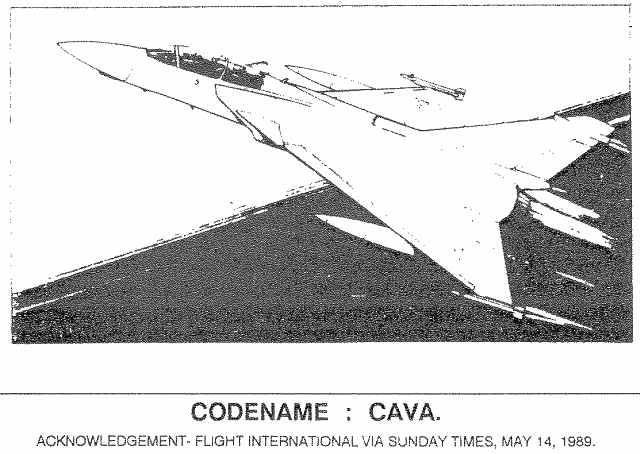
The FCA was the product of "Project Carver", a South African attempt at an indigenous 4th Generation jetfighter during the 1980s and early 1990s.
UN sanctions on South Africa, imposed in retaliation for the infamous Apartheid policy, precluded the importation of military technology from most countries; advanced warplanes included. Add-on the fact that South Africa was at war, and you get a double-whammy that put them in a very precarious position.
So, they decided to go it alone, developing the best fighter that Rands could buy, and South African industry could build, and the FCA was the result.
The intent was for a fighter that could best any airframe that hostile countries could possibly acquire anytime in the foreseeable future, as well as a high enough range and payload to replace the SADF's BS-2B Buccaneer Bombers. The latter is particularly noteworthy, as South Africa had independently developed and fielded Nuclear Weapons --- and the FCA would have been the preferred delivery platform.
However, the project was canceled in the early 1990s, before any could be built. The end of the Cold War, the lifting of the Apartheid, the destruction of South Africa's Nuclear stockpile, and the cancellation of the UN's sanctions meant not only that South Africa could import almost any aircraft they wanted, but also that there was no longer a need for it.
There was talk of reviving the program, using better technology than was available in the 1980s, but South Africa ultimately ended up importing the Swedish JAS-39 Gripen instead.
Approximate performance data for the FCA-1E is below.
===== FCA-1E Data =====
Role: Tactical Fighter
Unit Price: US$30 Million
Crew: 1
Size(LxWxH): 53x30x15ft
Wing Area: 450ft2
Empty Weight: 16000lbs
Internal Fuel: 9000lbs
Payload: 16000lbs
Max. T/O Weight: 40000lbs
Wing Loading: lb/ft2
T/W Ratio: 1.06
Fuel Fraction: 0.36
Range: 800nm
Ceiling: 60000ft
Cruise Speed: 450mph
Top Speed: Mach 2.2
Climb Rate: 50000ft/min
Initial Turn Rate: 30 degrees/sec
Continuous Turn Rate: 21 degrees/sec
Max. G-Load: +9/-3
Sensors: Pulse Doppler Radar
Scan Range: ~50nm@30 degrees
Look Down: Yes
Shoot Down: Yes
Propulsion: Atar 9K-50+ Turbojet w/ 12000lbs/military thrust, 17000llbs/AB
Thrust Vectoring: No
Weapon Stations: 2x DEFA 552A 30mm cannons w/250rds, 4x Hardpoint w/500lb capacity, 2x Hardpoint w/2000lb capacity, 4x Semi-recessed Bay w/1000lb capacity, 1x Centerline Hardpoint w/3000lb capacity
ECMs: Chaff/Flare launchers (30/30rds), Tactical Jammer
FBW: Yes
RCS: 4ft3
Stealth: No
Tailhook: No
Catapult Hitch: No
Drag Chute: Yes
AAR: Yes (Probe)
Other: Bubble canopy, HUD, 3-screen MFD, HOTAS, Zero-zero ejection seat, HMS
UN sanctions on South Africa, imposed in retaliation for the infamous Apartheid policy, precluded the importation of military technology from most countries; advanced warplanes included. Add-on the fact that South Africa was at war, and you get a double-whammy that put them in a very precarious position.
So, they decided to go it alone, developing the best fighter that Rands could buy, and South African industry could build, and the FCA was the result.
The intent was for a fighter that could best any airframe that hostile countries could possibly acquire anytime in the foreseeable future, as well as a high enough range and payload to replace the SADF's BS-2B Buccaneer Bombers. The latter is particularly noteworthy, as South Africa had independently developed and fielded Nuclear Weapons --- and the FCA would have been the preferred delivery platform.
However, the project was canceled in the early 1990s, before any could be built. The end of the Cold War, the lifting of the Apartheid, the destruction of South Africa's Nuclear stockpile, and the cancellation of the UN's sanctions meant not only that South Africa could import almost any aircraft they wanted, but also that there was no longer a need for it.
There was talk of reviving the program, using better technology than was available in the 1980s, but South Africa ultimately ended up importing the Swedish JAS-39 Gripen instead.
Approximate performance data for the FCA-1E is below.
===== FCA-1E Data =====
Role: Tactical Fighter
Unit Price: US$30 Million
Crew: 1
Size(LxWxH): 53x30x15ft
Wing Area: 450ft2
Empty Weight: 16000lbs
Internal Fuel: 9000lbs
Payload: 16000lbs
Max. T/O Weight: 40000lbs
Wing Loading: lb/ft2
T/W Ratio: 1.06
Fuel Fraction: 0.36
Range: 800nm
Ceiling: 60000ft
Cruise Speed: 450mph
Top Speed: Mach 2.2
Climb Rate: 50000ft/min
Initial Turn Rate: 30 degrees/sec
Continuous Turn Rate: 21 degrees/sec
Max. G-Load: +9/-3
Sensors: Pulse Doppler Radar
Scan Range: ~50nm@30 degrees
Look Down: Yes
Shoot Down: Yes
Propulsion: Atar 9K-50+ Turbojet w/ 12000lbs/military thrust, 17000llbs/AB
Thrust Vectoring: No
Weapon Stations: 2x DEFA 552A 30mm cannons w/250rds, 4x Hardpoint w/500lb capacity, 2x Hardpoint w/2000lb capacity, 4x Semi-recessed Bay w/1000lb capacity, 1x Centerline Hardpoint w/3000lb capacity
ECMs: Chaff/Flare launchers (30/30rds), Tactical Jammer
FBW: Yes
RCS: 4ft3
Stealth: No
Tailhook: No
Catapult Hitch: No
Drag Chute: Yes
AAR: Yes (Probe)
Other: Bubble canopy, HUD, 3-screen MFD, HOTAS, Zero-zero ejection seat, HMS
Category All / All
Species Unspecified / Any
Size 1024 x 1280px
File Size 83.1 kB

It's almost like a Mirage 2000, isn't it?
In many respects though, it's actually a superior design;
- It has Shoulder Wings, instead of Cantilever Wings.
- It has a LERX.
- It was to use an HMS (Helmet-Mounted Sight).
- The Bubble Canopy offers better visibility than the Mirage 2000's notch-like canopy.
- It's Splitter Plates offer a better feed of air to the engines than the Shock Cones of the Mirage 2000.
The engine and FCS weren't as good, but those would have been easily replaced in successive Blocks.
In many respects though, it's actually a superior design;
- It has Shoulder Wings, instead of Cantilever Wings.
- It has a LERX.
- It was to use an HMS (Helmet-Mounted Sight).
- The Bubble Canopy offers better visibility than the Mirage 2000's notch-like canopy.
- It's Splitter Plates offer a better feed of air to the engines than the Shock Cones of the Mirage 2000.
The engine and FCS weren't as good, but those would have been easily replaced in successive Blocks.

In the sense that South Africa actually planned to build it, the design was quite real;
http://i589.photobucket.com/albums/.....tion-image.jpg
http://www.secretprojects.co.uk/forum/index.php/topic,2684.0.html
...but none were ever actually completed.
http://www.flightglobal.com/pdfarch.....0-%200357.html
A twin-engine version was projected as well;
http://i7.photobucket.com/albums/y2.....ang/Carver.jpg
http://i589.photobucket.com/albums/.....tion-image.jpg
http://www.secretprojects.co.uk/forum/index.php/topic,2684.0.html
...but none were ever actually completed.
http://www.flightglobal.com/pdfarch.....0-%200357.html
A twin-engine version was projected as well;
http://i7.photobucket.com/albums/y2.....ang/Carver.jpg


Comments