
 FA+
FA+ Shop
Shop
393
Views
Views
13
Favorites
Favorites
Category
Photography / Scenery
Species Unspecified / Any
Size 1280 x 960
File Size 235.7 kB
Report this content
More from DaiCymru


Listed in Folders


The UK has thousands of miles of cycle paths, and one of its longest, National Cycle Route 4, runs from the centre of London to the shores of west Wales, following old railway lines across flat plains, country lanes up steep valley walls, and main roads through urban settlements over many hundreds of miles. In late August last year, I set off on a cycle ride that lasted for almost two days, with about 20 hours of my life spent peddling over a distance of 100 miles. While my original goal was to ride from my home in South Wales to the city of London, I reached my limits just as I was approaching the city of Bath in Somerset. It was perhaps the most trying experience of my life, and yet one of the most rewarding, and is one that come next summer I am eager to repeat and exceed. Naturally, I took plenty of snaps to share with you as I relay the trials and triumphs of my time on the trail.
By 1984, not 20 years since the opening of the Severn Bridge between England and Wales, it was projected that traffic on the bridge would soon hit capacity, having already tripled in 18 years. Those at the top decided that to provide for increased capacity a new bridge across the Severn estuary would need to be built. Following years of tender submissions and negotiations, construction work began on the new bridge in 1992, and it was opened to road traffic in 1996. Being further south along the estuary than the old bridge, the Second Severn Crossing was connected to the M4 motorway, reducing the journey time between England and Wales and reducing pressure on the original bridge, which had less of a sturdy design. Rather than a suspension bridge design like the old Severn Bridge, the Second Severn Crossing is a cable-stayed bridge, meaning that the weight of the bridge is borne by the towers rather than a thick cable. This means that the bridge has to be stronger (heavier), but it also has the advantage of being stiffer and thereby making it less likely to deform under pressure.
Who’da thunk this page would become all about bridges? Perhaps I should stop pont-ificating! :D
Hope you enjoy!
By 1984, not 20 years since the opening of the Severn Bridge between England and Wales, it was projected that traffic on the bridge would soon hit capacity, having already tripled in 18 years. Those at the top decided that to provide for increased capacity a new bridge across the Severn estuary would need to be built. Following years of tender submissions and negotiations, construction work began on the new bridge in 1992, and it was opened to road traffic in 1996. Being further south along the estuary than the old bridge, the Second Severn Crossing was connected to the M4 motorway, reducing the journey time between England and Wales and reducing pressure on the original bridge, which had less of a sturdy design. Rather than a suspension bridge design like the old Severn Bridge, the Second Severn Crossing is a cable-stayed bridge, meaning that the weight of the bridge is borne by the towers rather than a thick cable. This means that the bridge has to be stronger (heavier), but it also has the advantage of being stiffer and thereby making it less likely to deform under pressure.
Who’da thunk this page would become all about bridges? Perhaps I should stop pont-ificating! :D
Hope you enjoy!
Category Photography / Scenery
Species Unspecified / Any
Size 1280 x 960px
File Size 235.7 kB
Listed in Folders





Unlike 'Galloping Gertie', the original Tacoma Narrows Bridge. A favorite design of mine; an example of what happens when the government lets the accountants do the engineers' work!
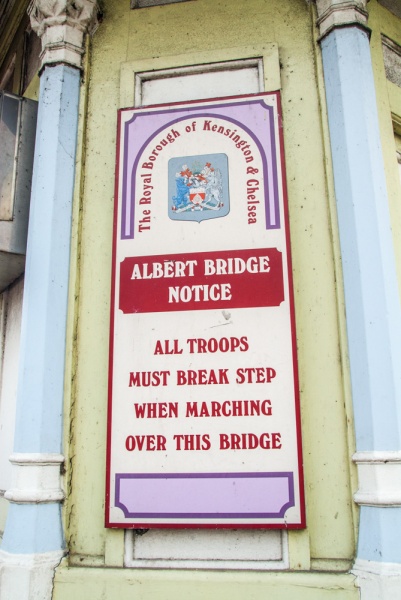
There are bridges over the Thames in London with large signs on them warning parading soldiers to break step as they cross the bridge, as the harmonic marching would cause structural harm to the bridge: https://www.britainexpress.com/imag.....ridge-0540.jpg


Comments