
 FA+
FA+ Shop
Shop
687
Views
Views
12
Favorites
Favorites
Category
All / All
Species Rabbit / Hare
Size 848 x 1200
File Size 828.3 kB
Report this content
More from Pipolla



Listed in Folders


I'm off to bed shortly. Have a big jerk while I sleep.
Height: 720’ (219.5m)
Age: Immortal
Abilities: Divinity
Occupation: God of rain and storms
Appearance
Rain is life. Showers from above soak the earth, feeding seeds which grow into precious crops. Living things must slake their thirst. Without rain, this world would grow barren and all would turn to dust. But rain is remorseless as it is compassionate. There are days when the heavens turn black and the torrent never ends. Thunder roars, storms howl, and the downpour washes away villages and people alike. Those who survive cry out to their gods as the surge lashes their drenched bodies. They have forgotten, as they often do. Their minds are so small, so full of little thoughts and distractions that demand their attention from what truly matters in their short lives. Someone has to remind them now and then who they owe their thanks to. When the rain comes, they need only look up into the sky.
History
When the gods look down and witness Xatubei basking in the love and adoration of her people, the heavens boil and rage with thunderous jealousy, for long ago, they once lived as she does, as deities who walked among mere mortals. But the world they gaze upon with bitterness and desire is not the first one, nor will it be the last.
The firmament exists in an obdurate cycle of creation and destruction, wrought by its creators many hands. No sooner had the breath of life washed over their newest world, the gods descended upon it and claimed territory for themselves. These vast stretches of earth, and the people who lived within their boundaries, became theirs to do with as they pleased. Here was where a god resided, and grew to be loved or feared by the masses. But gods are never content with what they have. They always crave more. More praise. More power. More worship. Borders became hotbeds of conflict between the priests of neighboring deities, who, at their god’s bidding, sought to convert the populace through miraculous captivation or horrendous acts of wrath. Tensions frothed and flared into all-out war between their mortal followers, climaxing in an epic clash of the titans as god fought god and shattered their world. With nothing to show for all their efforts but bruised egos and molten chunks of rock drifting through the void, the gods spat curses and blamed one another for what had happened. Only afterwards would they storm off to lick their wounds, cool their heads, then reunite and prepare for the next cycle.
Attempts were made to avoid the inevitable. They scattered themselves upon their work, made themselves small and scarce, living in remote and distant lands far from each other and the people who worshipped them. But though miracle and spectacle of earth and sky, water and war, mortals were drawn to them like moths to flame, and the gods were lured out from their places of hiding to take their rightful place among their people. Again, their priests stole followers, their mortal armies clashed, the gods battled, and the world was extinguished.
They had enough. Cualani, goddess of tactical warfare, protector of hearth and home, declared a proposition: no more would they live among mortals. No more would they give into their ceaseless lust for power. They would create once more, and then stay in the heavens. Whatever happened to the world, the people, and who they worshipped, would be left up to fate. Do this, or give into their desires and be consumed by the unending cycle. Her peers were distraught and angered by the choice that lay before them, but one by one they conceded to her wisdom, understanding it was for the good of all to maintain peace.
But Cualtzinacueitl was furious. If he agreed to her proposal, his connection to the mortal world would be forever severed. No longer could he tread upon the land and feel the earth shudder beneath his stride, drink in the roaring praise of the faceless multitudes who glorified him in ecstatic holy bliss, who obeyed without question, sacrificed themselves in his name by the thousands without the slightest hesitation. What was the point of being a god if he couldn’t partake in these simple joys? What good was a god if they were no longer seen or felt, their almighty voice reduced to annoying buzzing? What if the mortals neglected him? Ignored him? Forgot about him? In keeping the peace, she would condemn them to wither and rot, doom him to an inglorious end through starvation the instant people had forgotten the gods and their place. He knew what had to be done.
Creation demands something to be given up, be it flesh, the mind, or one’s very life, for something cannot come of nothing. His goal this cycle was one of preservation. By pressuring lesser gods into giving up more of themselves and forging a fragile alliance with the brutal war god Hueyatototl to intimidate his equals, Cualtzinacueitl had managed to skirt through the process intact. With the other gods left weakened and debilitated by their contributions, none were able to stop him from taking his place as the Sun supreme god of the coming cycle. He need only pluck his eyes out, plunge them into the inferno. And what followed his ascension was chaos…
Abilities
Gods have no need for rest. Food and drink are the concerns of mortal flesh, but a gnawing, unceasing hunger compels them to seek nourishment. Their divine bodies crave worship to sustain themselves, demand sacrifice to grow in strength and increase their influence in their tug-of-war game of dominance against one another. Cualtzin is no different. Though he cannot hope to compete with the level of affection Xatubei’s left tit is able to muster on an off day, his role as the god of rain and storms ensures that his worship remains in great demand. Withholding precious rain from a drought-stricken region guarantees him a substantial helping of sacrifices from every village and city affected. And cities begging his forgiveness after severe flooding sees him reap a bountiful harvest.
Gods that occupy critical niches necessary for survival naturally see themselves rise in power over their peers. Those who crowd the same role must compete against each other for supremacy over that domain. And any deity whose role is vaguely soggy is outmatched by a cruel god who drowns their worshippers to strengthen himself beyond any hope of fighting back, forcing them to be relegated to obscure deities in far-flung puddles, or be devoured and have their power absorbed into his.
Storm and rain, water and wind, the tempests bend to his whims. The devastation he wreaks is amplified by his third domain: sorcery. If Cualtzin wished it, he could very well inflict havoc across the heavens, annihilating civilizations with little effort should it please him. To the great (mis)fortune of all, however, he is content with denying people rain and flooding places at random, and preying upon weaker gods.
Personality
Since the gods have to eat as well, some deities will lend their worshippers a hand. An earth god might bless the soil so that grateful farmers and families will thank them at harvest time with generous prayers and sacrifice. A goddess of the hunt may offer a worthy hunter the chance of great game, that they might revere her above all others in gratitude. Cualtzin does none of this. He cares little for mortals and their scant lives, especially when they and the animals and plants they eat need rain to live, and he himself has little need for their love. How, then, does he gather the necessary worship he needs to sustain himself? He simply holds back the rain. When crops wither and die and the land grows barren in drought, desperate cities and villages make great sacrifices to him. And he answers their prayers with lashing winds and unending rain, just to see them beg and worship him harder in hopes that the deluge will finally stop.
Cualtzin’s mercurial malice extends even to his godly peers. While he may distance himself from those on relatively equal standing with him out of fear of well-deserved retribution, he will not hesitate to lord his superiority over his many lessers, especially those gods who bear the unfortunate fate of sharing overlapping domains with him. His power increases with the suffering he happily inflicts upon the people, while the strength of the other water gods’ wanes. It’s only a matter of time, he likes to remind them, before they and their roles are swallowed up by him.
Worshippers
One would think a callous god who regularly drowns mortals and floods their cities for his amusement would have few to no worshippers. But those who survive the downpour are desperate to appease the storm god, who they believe they have somehow greatly displeased with improper worship. And those soaking unfortunates and their drenched sacrifices require priests to send up the offered essence to its proper place. Even Cualtzin has a begrudging need for his priests, for they are the earthly extension of his almighty will, the keepers of ceremonies and rites necessary to pacify and nourish their deity. But in contrast to the battle-tempered swoleness of Hueyatototl’s cadre and the obscene thiccness of Xatubei’s flock, Cualtzin’s subordinates are as blind and frail as their god, who are led about by equally lean apprentices that handle anything that requires eyes while they still have theirs. They make up for their lack of anything physical with the gifts of divination and magic, allowing them to act as seers for their people, and storm-callers who can summon thunder and torrents of rain.
Shortly after Xatubei’s ascension, she freely offered blessings to all who would call her their goddess. Not wanting to lose their precious worshippers to the big tiddy bird goddess, the other deities, once tightfisted with their boons, were compelled to offer gifts to their people. Unfortunately for his priests and priestesses, Cualtzin has neglected to teach them how to safely harness the gifts that grow in intensity the deeper their devotion to their uncaring lord. Their predictions become increasingly erratic, prone to humiliating blunders or frightening accuracy at seemingly random, and their magic, already barely contained, now rages untamed beyond the caster’s control as dangerous as any tempest.
But the most disturbing feature of all to outsiders are the whispers echoing through the watery halls of his temples. His very voice, the higher-ups claim, murmuring his unknowable whims to all who would listen. To what end, even they cannot predict.
Relations
Cualtzin is perhaps the only deity who is content with allowing Xatubei to exist unchallenged. He is all too aware that her mere presence threatens the gods, for they grow weaker the longer she is allowed to siphon worshippers and sacrifices from them, the same tiresome refrain they air in his company. But he makes no attempt at lip service, no effort at soothing their concerns. The storm god does not descend from on high to rain on her parade and stop the fertility goddess from growing ever more powerful. He does not look the other way because he covets her affection or her body – he could not care less for an insect he can literally crush under his thumb. Xatubei is left alone out of convenience. Leeching their strength keeps them weak, and the weakest find themselves cornered and sliding down Cualtzin’s throat. As much as the people love her ever-expanding bust, her milk cannot grow crops. His role as the storm god is secure, thus she is no threat to him and his plans. Apart from observing her actions, be it from on high, or through more covert means such as avatars and shapeshifting while suppressing the odd jealous pang all the while, Cualtzin simply leaves her be and allows her to do as she wishes.
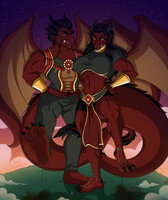
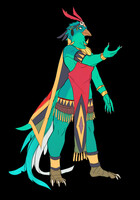
The only other being who is spared his cruelty is his lover, Hueyatototl. In the war god’s presence, Cualtzinacueitl reveals a far gentler, more affectionate side of himself few have ever witnessed. The heartless titan becomes soft spoken while clinging to his boyfriend’s massive arm wherever his seeing eye bird takes him, doting on his every need. It may have something to do with being in the presence of a living mountain that rises heads taller than himself, all those hard, rippling muscles and the giant slab of meat between his bulky legs that leaves the thirsty rabbit weak at the knees. The pair often spend their time within each other’s realms, pockets within the empyrean the gods call home. Some of these regions, each molded by their creator’s will, serve as afterlives where their mortal followers serve their god for eternity, and few deities are foolish enough to trespass upon these domains when the owner is present. Their power maintains these pockets, and it is here where their essence is at its most potent and its creator at their most powerful. Yet the pair come and go – hand in hand, or more often, Cualtzin carried in Hueya’s arms – as they please from Hueya’s battlegrounds so Cualtzin can admire Hueya in his native habitatand make love to him while washing the sweat off his body, or Cualtzin’s expanse so the storm god can get reamed can rest and spend quality time with his boyfriend.
How has he not been fired into the sun yet. The world may never know.
Cualtzin doesn't appear in anything yet, but will eventually(TM)
Art done by jetmongrel / jetmongrel on Twitter
Cualtzin et al belong to me
Height: 720’ (219.5m)
Age: Immortal
Abilities: Divinity
Occupation: God of rain and storms
Appearance
Rain is life. Showers from above soak the earth, feeding seeds which grow into precious crops. Living things must slake their thirst. Without rain, this world would grow barren and all would turn to dust. But rain is remorseless as it is compassionate. There are days when the heavens turn black and the torrent never ends. Thunder roars, storms howl, and the downpour washes away villages and people alike. Those who survive cry out to their gods as the surge lashes their drenched bodies. They have forgotten, as they often do. Their minds are so small, so full of little thoughts and distractions that demand their attention from what truly matters in their short lives. Someone has to remind them now and then who they owe their thanks to. When the rain comes, they need only look up into the sky.
History
When the gods look down and witness Xatubei basking in the love and adoration of her people, the heavens boil and rage with thunderous jealousy, for long ago, they once lived as she does, as deities who walked among mere mortals. But the world they gaze upon with bitterness and desire is not the first one, nor will it be the last.
The firmament exists in an obdurate cycle of creation and destruction, wrought by its creators many hands. No sooner had the breath of life washed over their newest world, the gods descended upon it and claimed territory for themselves. These vast stretches of earth, and the people who lived within their boundaries, became theirs to do with as they pleased. Here was where a god resided, and grew to be loved or feared by the masses. But gods are never content with what they have. They always crave more. More praise. More power. More worship. Borders became hotbeds of conflict between the priests of neighboring deities, who, at their god’s bidding, sought to convert the populace through miraculous captivation or horrendous acts of wrath. Tensions frothed and flared into all-out war between their mortal followers, climaxing in an epic clash of the titans as god fought god and shattered their world. With nothing to show for all their efforts but bruised egos and molten chunks of rock drifting through the void, the gods spat curses and blamed one another for what had happened. Only afterwards would they storm off to lick their wounds, cool their heads, then reunite and prepare for the next cycle.
Attempts were made to avoid the inevitable. They scattered themselves upon their work, made themselves small and scarce, living in remote and distant lands far from each other and the people who worshipped them. But though miracle and spectacle of earth and sky, water and war, mortals were drawn to them like moths to flame, and the gods were lured out from their places of hiding to take their rightful place among their people. Again, their priests stole followers, their mortal armies clashed, the gods battled, and the world was extinguished.
They had enough. Cualani, goddess of tactical warfare, protector of hearth and home, declared a proposition: no more would they live among mortals. No more would they give into their ceaseless lust for power. They would create once more, and then stay in the heavens. Whatever happened to the world, the people, and who they worshipped, would be left up to fate. Do this, or give into their desires and be consumed by the unending cycle. Her peers were distraught and angered by the choice that lay before them, but one by one they conceded to her wisdom, understanding it was for the good of all to maintain peace.
But Cualtzinacueitl was furious. If he agreed to her proposal, his connection to the mortal world would be forever severed. No longer could he tread upon the land and feel the earth shudder beneath his stride, drink in the roaring praise of the faceless multitudes who glorified him in ecstatic holy bliss, who obeyed without question, sacrificed themselves in his name by the thousands without the slightest hesitation. What was the point of being a god if he couldn’t partake in these simple joys? What good was a god if they were no longer seen or felt, their almighty voice reduced to annoying buzzing? What if the mortals neglected him? Ignored him? Forgot about him? In keeping the peace, she would condemn them to wither and rot, doom him to an inglorious end through starvation the instant people had forgotten the gods and their place. He knew what had to be done.
Creation demands something to be given up, be it flesh, the mind, or one’s very life, for something cannot come of nothing. His goal this cycle was one of preservation. By pressuring lesser gods into giving up more of themselves and forging a fragile alliance with the brutal war god Hueyatototl to intimidate his equals, Cualtzinacueitl had managed to skirt through the process intact. With the other gods left weakened and debilitated by their contributions, none were able to stop him from taking his place as the Sun supreme god of the coming cycle. He need only pluck his eyes out, plunge them into the inferno. And what followed his ascension was chaos…
Abilities
Gods have no need for rest. Food and drink are the concerns of mortal flesh, but a gnawing, unceasing hunger compels them to seek nourishment. Their divine bodies crave worship to sustain themselves, demand sacrifice to grow in strength and increase their influence in their tug-of-war game of dominance against one another. Cualtzin is no different. Though he cannot hope to compete with the level of affection Xatubei’s left tit is able to muster on an off day, his role as the god of rain and storms ensures that his worship remains in great demand. Withholding precious rain from a drought-stricken region guarantees him a substantial helping of sacrifices from every village and city affected. And cities begging his forgiveness after severe flooding sees him reap a bountiful harvest.
Gods that occupy critical niches necessary for survival naturally see themselves rise in power over their peers. Those who crowd the same role must compete against each other for supremacy over that domain. And any deity whose role is vaguely soggy is outmatched by a cruel god who drowns their worshippers to strengthen himself beyond any hope of fighting back, forcing them to be relegated to obscure deities in far-flung puddles, or be devoured and have their power absorbed into his.
Storm and rain, water and wind, the tempests bend to his whims. The devastation he wreaks is amplified by his third domain: sorcery. If Cualtzin wished it, he could very well inflict havoc across the heavens, annihilating civilizations with little effort should it please him. To the great (mis)fortune of all, however, he is content with denying people rain and flooding places at random, and preying upon weaker gods.
Personality
Since the gods have to eat as well, some deities will lend their worshippers a hand. An earth god might bless the soil so that grateful farmers and families will thank them at harvest time with generous prayers and sacrifice. A goddess of the hunt may offer a worthy hunter the chance of great game, that they might revere her above all others in gratitude. Cualtzin does none of this. He cares little for mortals and their scant lives, especially when they and the animals and plants they eat need rain to live, and he himself has little need for their love. How, then, does he gather the necessary worship he needs to sustain himself? He simply holds back the rain. When crops wither and die and the land grows barren in drought, desperate cities and villages make great sacrifices to him. And he answers their prayers with lashing winds and unending rain, just to see them beg and worship him harder in hopes that the deluge will finally stop.
Cualtzin’s mercurial malice extends even to his godly peers. While he may distance himself from those on relatively equal standing with him out of fear of well-deserved retribution, he will not hesitate to lord his superiority over his many lessers, especially those gods who bear the unfortunate fate of sharing overlapping domains with him. His power increases with the suffering he happily inflicts upon the people, while the strength of the other water gods’ wanes. It’s only a matter of time, he likes to remind them, before they and their roles are swallowed up by him.
Worshippers
One would think a callous god who regularly drowns mortals and floods their cities for his amusement would have few to no worshippers. But those who survive the downpour are desperate to appease the storm god, who they believe they have somehow greatly displeased with improper worship. And those soaking unfortunates and their drenched sacrifices require priests to send up the offered essence to its proper place. Even Cualtzin has a begrudging need for his priests, for they are the earthly extension of his almighty will, the keepers of ceremonies and rites necessary to pacify and nourish their deity. But in contrast to the battle-tempered swoleness of Hueyatototl’s cadre and the obscene thiccness of Xatubei’s flock, Cualtzin’s subordinates are as blind and frail as their god, who are led about by equally lean apprentices that handle anything that requires eyes while they still have theirs. They make up for their lack of anything physical with the gifts of divination and magic, allowing them to act as seers for their people, and storm-callers who can summon thunder and torrents of rain.
Shortly after Xatubei’s ascension, she freely offered blessings to all who would call her their goddess. Not wanting to lose their precious worshippers to the big tiddy bird goddess, the other deities, once tightfisted with their boons, were compelled to offer gifts to their people. Unfortunately for his priests and priestesses, Cualtzin has neglected to teach them how to safely harness the gifts that grow in intensity the deeper their devotion to their uncaring lord. Their predictions become increasingly erratic, prone to humiliating blunders or frightening accuracy at seemingly random, and their magic, already barely contained, now rages untamed beyond the caster’s control as dangerous as any tempest.
But the most disturbing feature of all to outsiders are the whispers echoing through the watery halls of his temples. His very voice, the higher-ups claim, murmuring his unknowable whims to all who would listen. To what end, even they cannot predict.
Relations
Cualtzin is perhaps the only deity who is content with allowing Xatubei to exist unchallenged. He is all too aware that her mere presence threatens the gods, for they grow weaker the longer she is allowed to siphon worshippers and sacrifices from them, the same tiresome refrain they air in his company. But he makes no attempt at lip service, no effort at soothing their concerns. The storm god does not descend from on high to rain on her parade and stop the fertility goddess from growing ever more powerful. He does not look the other way because he covets her affection or her body – he could not care less for an insect he can literally crush under his thumb. Xatubei is left alone out of convenience. Leeching their strength keeps them weak, and the weakest find themselves cornered and sliding down Cualtzin’s throat. As much as the people love her ever-expanding bust, her milk cannot grow crops. His role as the storm god is secure, thus she is no threat to him and his plans. Apart from observing her actions, be it from on high, or through more covert means such as avatars and shapeshifting while suppressing the odd jealous pang all the while, Cualtzin simply leaves her be and allows her to do as she wishes.
The only other being who is spared his cruelty is his lover, Hueyatototl. In the war god’s presence, Cualtzinacueitl reveals a far gentler, more affectionate side of himself few have ever witnessed. The heartless titan becomes soft spoken while clinging to his boyfriend’s massive arm wherever his seeing eye bird takes him, doting on his every need. It may have something to do with being in the presence of a living mountain that rises heads taller than himself, all those hard, rippling muscles and the giant slab of meat between his bulky legs that leaves the thirsty rabbit weak at the knees. The pair often spend their time within each other’s realms, pockets within the empyrean the gods call home. Some of these regions, each molded by their creator’s will, serve as afterlives where their mortal followers serve their god for eternity, and few deities are foolish enough to trespass upon these domains when the owner is present. Their power maintains these pockets, and it is here where their essence is at its most potent and its creator at their most powerful. Yet the pair come and go – hand in hand, or more often, Cualtzin carried in Hueya’s arms – as they please from Hueya’s battlegrounds so Cualtzin can admire Hueya in his native habitat
How has he not been fired into the sun yet. The world may never know.
Cualtzin doesn't appear in anything yet, but will eventually(TM)
Art done by
 jetmongrel / jetmongrel on Twitter
Cualtzin et al belong to me
Category All / All
Species Rabbit / Hare
Size 848 x 1200px
File Size 828.3 kB
Listed in Folders



Wow, what a total scumbag! Doing everything he can to torment people (right down to covering those bunny paws)...
And knowing rabbits in that type of mythology, I'm wondering if he's also a drunken bastard.
And knowing rabbits in that type of mythology, I'm wondering if he's also a drunken bastard.

Comments