
 FA+
FA+ Shop
Shop
414
Views
Views
22
Favorites
Favorites
Category
Photography / Animal related (non-anthro)
Species Tiger
Size 800 x 617
File Size 508.8 kB
Report this content
More from WalkingTiger
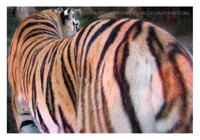
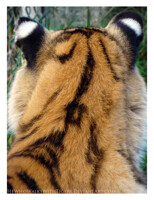



As a volunteer at Jungle Cat World, I often try to find ways of brightening the lives of the animals there. Commonly, this manifests as “enrichment”, which among zookeepers is the process of providing objects or activities that allow animals the opportunity to exhibit natural behaviours and maintain an active lifestyle. For the animals, it can be quite a bit of fun and brings some excitement into their lives.
I usually bring in toys or spices when I volunteer. Tigers, jaguars and leopards, among others, will go crazy for simple, over-the-counter allspice; they will sniff it, roll in it and lick it in a state of ecstasy not unlike a domestic cat’s response to catnip. Being so scent driven in their social life, I reckon their positive response to spice is akin to our trying different or favourite foods.
This photo was taken on the birthday of Kumara, an Amur tigress (Panthera tigris altaica). For the occasion, I made her a special cake made of a frozen milk icing with delicious meat inside. After several experiments, I determined that she liked the venison the most. It was a perfect summer treat for her.
I’ll definitely keeping trying to come up with ways to make the lives of the animals fun and exciting. If you’re interested in doing the same for a local zoo, feel free to ask to see if there is anything they might be interested in.
---
Tigers are the largest of the big cats and are exclusively found in Asia from India to Vietnam, from Indonesia to the Russian Far East. The tiger can be divided into 9 subspecies: 4 are currently critically endangered and 3 are already extinct. Though estimations of tiger populations only a few years ago was 5,500-6,000, today populations are likely closer to 3,500 and are still declining. Dramatic declines of the tiger in India, thought to host the majority of the world's tigers, have fallen to less than 1,411. Overall, the past decade has seen a 40% reduction in tiger habitat, which now represents a mere 7% of its historic range. Poaching is a significant problem throughout the tiger's range, the demand for its body parts in traditional medicines, tonics, and exotic dishes driving a lucrative trade that is wiping out entire populations. Long-term threats include habitat fragmentation and prey depletion, which is accelerating the tiger's demise and subsequently reducing the long-term genetic viability of many populations.
If you want to help, the best for you to do is to educate yourself (http://www.savethetigerfund.org/), never buy products made from tigers or endangered species (http://www.wildaid.org/), and tell others. Contact me for more information.
I usually bring in toys or spices when I volunteer. Tigers, jaguars and leopards, among others, will go crazy for simple, over-the-counter allspice; they will sniff it, roll in it and lick it in a state of ecstasy not unlike a domestic cat’s response to catnip. Being so scent driven in their social life, I reckon their positive response to spice is akin to our trying different or favourite foods.
This photo was taken on the birthday of Kumara, an Amur tigress (Panthera tigris altaica). For the occasion, I made her a special cake made of a frozen milk icing with delicious meat inside. After several experiments, I determined that she liked the venison the most. It was a perfect summer treat for her.
I’ll definitely keeping trying to come up with ways to make the lives of the animals fun and exciting. If you’re interested in doing the same for a local zoo, feel free to ask to see if there is anything they might be interested in.
---
Tigers are the largest of the big cats and are exclusively found in Asia from India to Vietnam, from Indonesia to the Russian Far East. The tiger can be divided into 9 subspecies: 4 are currently critically endangered and 3 are already extinct. Though estimations of tiger populations only a few years ago was 5,500-6,000, today populations are likely closer to 3,500 and are still declining. Dramatic declines of the tiger in India, thought to host the majority of the world's tigers, have fallen to less than 1,411. Overall, the past decade has seen a 40% reduction in tiger habitat, which now represents a mere 7% of its historic range. Poaching is a significant problem throughout the tiger's range, the demand for its body parts in traditional medicines, tonics, and exotic dishes driving a lucrative trade that is wiping out entire populations. Long-term threats include habitat fragmentation and prey depletion, which is accelerating the tiger's demise and subsequently reducing the long-term genetic viability of many populations.
If you want to help, the best for you to do is to educate yourself (http://www.savethetigerfund.org/), never buy products made from tigers or endangered species (http://www.wildaid.org/), and tell others. Contact me for more information.
Category Photography / Animal related (non-anthro)
Species Tiger
Size 800 x 617px
File Size 508.8 kB


Comments