
 FA+
FA+ Shop
Shop
6982
Views
Views
293
Favorites
Favorites
Category
Artwork (Traditional) / All
Species Unspecified / Any
Size 700 x 1016
File Size 271 kB
Report this content
More from Blotch


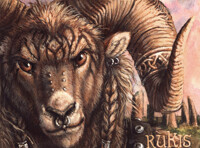



Here are a couple photos of painting a panel from Page 19 from the comic Across Thin Ice. You can see the finished page over here.
There's also more in-progress photos of painting/inking this page on the Nordguard's development blog and Livejournal, as well as on www.Nordguard.com, specifically here.
There's also more in-progress photos of painting/inking this page on the Nordguard's development blog and Livejournal, as well as on www.Nordguard.com, specifically here.
Category Artwork (Traditional) / All
Species Unspecified / Any
Size 700 x 1016px
File Size 271 kB









I use a mix of Sennelier and Speedball ink, which is waterproof and won't blend or fade much with all the wet watercolor washes. I had to test a bunch of inks in the art store before I could find one that wouldn't bleed...I do have to go back and re-ink a few things while I work, especially if I am using much acrylic over top.

thank you very much for sharing that with me. I'll have to purchase some speedball ink sometime. As for Sennelier, I have not seen that supplier in any local stores in my town, so I'll have to try mixing speedball with something else, or buy some of their stuff online or try my own mixtures.. You're work really is quite impressive. I'll probably nag you more for tips if you don't mind.


















*waggwaggwaggwagg* Oh very cool! I wish more artists would do this sort of thing so everyone can appreciate the amount of work which goes into creating something like this. I love to see how things work and are put together! Nicely done Blotch! *hugsablotch* I am hoping to get a copy of this when it is complete!
Short answer: Old photographs, read, watch documentaries, go to museums, travel (and first hand experience where available.)
And the long, rambling answer:
The 1900's is tough, because not a whole lot happened in the early turn of the century. The Nordguard uniforms are based on the 1880 uniforms of (what became) the Royal Canadian Mounted Police. Old photographs are also a good way to research period clothing. Most public libraries (at least out here in the West) have droves. It's an easy way to find dressy clothing (like in a family portrait) or more "salt the earth," kinds of people, like miners or prospectors.
For the bulk of research, I read just about every published arctic journal from the period (expedition journals are always great, since they cover mundane day-to-day things, generally list supplies as they deteriorate, and the author pines for things back home.) Plus, I read few broad (and boring) textbooks covering the era, technological advances, political climate, major historic events-- then a few more specialized texts on things like the history/process of mining in the 1900's. I also read a handful of more modern mountineering biographies, about things like reaching the summit of Everest or Touching the Void by Joe Simpson. Lastly, books like People of the Deer by Farley Mowat, and a couple more recording the oral histories of the north-eastern Inuit.
I also watched a lot of documentaries on the arctic (and antarctic), covering a broad range of topics (like connecting Alaska to Seattle via telegraph, the 10th Mountain Division of specialized corps for WWI, the creation of Nunavut, how ice freezes, and so on.)
I also live in an area with a lot of late 1800's/early 1900's historic buildings, so finding museums with collections or other specific things (such as the train) were just a short drive away.
First hand experience for a place is also important to developing a story, I think. You can pick up those little details and try to use the experience to make your world more real. I made a couple friends while finding folks to talk about arctic stuff with, one down at McMurdo in Antarctic, another researching climate changes in Greenland, both who don't mind sharing photographs or first-hand experience about the cold. Personally, I learned to dog sled, in -30 degrees, and got a feel for it, the gear and the sled (and frostbite). I also went up to Alaska in March, got to handle sleddogs for the start of the Iditarod race, met with mushers, checked out Anchorage's museums, and took about a bazillion reference photos.
I took notes on it all, which helped to refine my original story draft considerably. The comic isn't meant to be 100% historically accurate in the slightest, since, for one thing, it's talking animal people--but I did try to capture the essence of the era and the arctic.
I was writing and researching everything for about a year, I'd say, before the first page of the comic was drawn. It was a pleasure to research, since it's a topic that I find really intriguing. Which is good to know, since now I just have to draw and paint the silly thing day after day after day. ;]
And the long, rambling answer:
The 1900's is tough, because not a whole lot happened in the early turn of the century. The Nordguard uniforms are based on the 1880 uniforms of (what became) the Royal Canadian Mounted Police. Old photographs are also a good way to research period clothing. Most public libraries (at least out here in the West) have droves. It's an easy way to find dressy clothing (like in a family portrait) or more "salt the earth," kinds of people, like miners or prospectors.
For the bulk of research, I read just about every published arctic journal from the period (expedition journals are always great, since they cover mundane day-to-day things, generally list supplies as they deteriorate, and the author pines for things back home.) Plus, I read few broad (and boring) textbooks covering the era, technological advances, political climate, major historic events-- then a few more specialized texts on things like the history/process of mining in the 1900's. I also read a handful of more modern mountineering biographies, about things like reaching the summit of Everest or Touching the Void by Joe Simpson. Lastly, books like People of the Deer by Farley Mowat, and a couple more recording the oral histories of the north-eastern Inuit.
I also watched a lot of documentaries on the arctic (and antarctic), covering a broad range of topics (like connecting Alaska to Seattle via telegraph, the 10th Mountain Division of specialized corps for WWI, the creation of Nunavut, how ice freezes, and so on.)
I also live in an area with a lot of late 1800's/early 1900's historic buildings, so finding museums with collections or other specific things (such as the train) were just a short drive away.
First hand experience for a place is also important to developing a story, I think. You can pick up those little details and try to use the experience to make your world more real. I made a couple friends while finding folks to talk about arctic stuff with, one down at McMurdo in Antarctic, another researching climate changes in Greenland, both who don't mind sharing photographs or first-hand experience about the cold. Personally, I learned to dog sled, in -30 degrees, and got a feel for it, the gear and the sled (and frostbite). I also went up to Alaska in March, got to handle sleddogs for the start of the Iditarod race, met with mushers, checked out Anchorage's museums, and took about a bazillion reference photos.
I took notes on it all, which helped to refine my original story draft considerably. The comic isn't meant to be 100% historically accurate in the slightest, since, for one thing, it's talking animal people--but I did try to capture the essence of the era and the arctic.
I was writing and researching everything for about a year, I'd say, before the first page of the comic was drawn. It was a pleasure to research, since it's a topic that I find really intriguing. Which is good to know, since now I just have to draw and paint the silly thing day after day after day. ;]
I'm sorry for bugging you again, and I appreciate your time. I had a few more questions about painting technicalities. I was taught a lot of things in school about theory and such, but I never really learned much about the tools and practises in painting, especially watercolour.
First off, why does one "soak" their watercolour paper? What benefit does one get from doing that and is it better than not soaking the paper at all? When you soak it, do you completely submerge in a tub of water and leave it to dry, or do you use a brush to get it wet. If you use a brush, do you apply water on both sides or just the side you're going to work on?
Is it better to staple the edges of your paper onto a board, or to tape it? Is using a watercolour block worse than using individual pages that you staple to board, or do you remove pages from a block before painting anyway?
I've heard of certain applicants being used on acrylic and oil paints like 'gesso' or 'retarder' or something like that. is there anything like that used for watercolour jobs?
Do you approach a landscape painting the same way you approach painting a character / group of characters?
When you're making a palette, do you get enough colours to last you through the entire page, or are you continually remixing and adding paint to your palette as you go through a page?
When you use acrylic paints, for what parts do you use them? Are they just for highlights? or are they used for entire sections of a page/panel?
Are these questions all too trivial? Is this something I should be asking or should I be just painting and figuing out things on my own?
First off, why does one "soak" their watercolour paper? What benefit does one get from doing that and is it better than not soaking the paper at all? When you soak it, do you completely submerge in a tub of water and leave it to dry, or do you use a brush to get it wet. If you use a brush, do you apply water on both sides or just the side you're going to work on?
Is it better to staple the edges of your paper onto a board, or to tape it? Is using a watercolour block worse than using individual pages that you staple to board, or do you remove pages from a block before painting anyway?
I've heard of certain applicants being used on acrylic and oil paints like 'gesso' or 'retarder' or something like that. is there anything like that used for watercolour jobs?
Do you approach a landscape painting the same way you approach painting a character / group of characters?
When you're making a palette, do you get enough colours to last you through the entire page, or are you continually remixing and adding paint to your palette as you go through a page?
When you use acrylic paints, for what parts do you use them? Are they just for highlights? or are they used for entire sections of a page/panel?
Are these questions all too trivial? Is this something I should be asking or should I be just painting and figuing out things on my own?

Comments