
 FA+
FA+ Shop
Shop


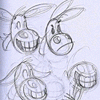
Ink, then digital.
Work for an upcoming Ironclaw project.
====
For most horses the best of times has already passed, and the age of chivalry is in dwindling twilight. Without an active crusade to commit to, nor clear battlelines to hold, horses do their best to preserve the way of the honourable sword and shield in an age of crude muskets and even cruder musketeers.
To the contemporary cynic, horses are pompous, nostalgic fools, clomping around in ridiculous armour that appears more like a costume than useful martial attire. They have no grasp of subtlety, wearing their hearts on their sleeves, often speaking in "thees" and "thous" and swearing oaths by their blades and so on. Even the highest nobility among them lack the urbane sophistication of the lowest grey fox in the most backwater barony.
And there might be some small truth to this perception, however the greater truth is that every aspect of the equine world is codified with subtle meaning - even down to the way they walk. The clip-clop and clang of a horse's approach is purposeful affectation to announce the coming of a fearless soul. A procession of horses is an unmistakable percussive symphony with coded messages for those knowledgeable in equine lore; they have specific gaits and shuffles with different overtones: away to battle, returning in triumph, journeying in pilgrimage, and so on. On the battlefield, they tend to traditional, open-field formations and trumpeted maneuvers at dawn; commando tactics are seen as dishonourable and distasteful.
They are similarly forthright in other aspects, speaking openly, bluntly and with little regard for sophistry or philosophy. Horses don't make for particularly good wordsmiths, lawyers, clergy, or actors, and they tend to take themselves far too seriously to do well in broadbased politics. However, they make excellent field marshals and a right-hand to power - as long as those in charge keep the respect of the horse in question.
Horses are steeped in tradition, and they order their their world around routine, ceremony and etiquette. A pledged equine is bound without exception. This can make them susceptible to unscrupulous manipulators, but also champions and formidable avengers of those mistreated by such villainy.
Outside of their castle keeps, the lone horse wandering as a freelance knight is something of a romantic cliche, but not one without merit. They aren't solitary by nature, but it is hard for most people to keep the company of a horse without bumping into some kind of conflict with their personal code, and so horses in the world are typically transient. Though generally welcome wherever they go, they aren't able to settle for long without trouble.
There is little more compelling and unique than a cavalry parade of horses, each resplendent in family colors and gleaming in old-fashioned heirloom armour, or to witness the clash of two horses engaged in that particularly equine eccentricity: a joust. The latter is traditionally performed to openly settle disputes without lingering enmity, and though it might just seem like two brutes clashing, it is a profoundly controlled event. Jousts result in bonds of mutual respect and understanding that no courtly trial could reproduce.
Work for an upcoming Ironclaw project.
====
For most horses the best of times has already passed, and the age of chivalry is in dwindling twilight. Without an active crusade to commit to, nor clear battlelines to hold, horses do their best to preserve the way of the honourable sword and shield in an age of crude muskets and even cruder musketeers.
To the contemporary cynic, horses are pompous, nostalgic fools, clomping around in ridiculous armour that appears more like a costume than useful martial attire. They have no grasp of subtlety, wearing their hearts on their sleeves, often speaking in "thees" and "thous" and swearing oaths by their blades and so on. Even the highest nobility among them lack the urbane sophistication of the lowest grey fox in the most backwater barony.
And there might be some small truth to this perception, however the greater truth is that every aspect of the equine world is codified with subtle meaning - even down to the way they walk. The clip-clop and clang of a horse's approach is purposeful affectation to announce the coming of a fearless soul. A procession of horses is an unmistakable percussive symphony with coded messages for those knowledgeable in equine lore; they have specific gaits and shuffles with different overtones: away to battle, returning in triumph, journeying in pilgrimage, and so on. On the battlefield, they tend to traditional, open-field formations and trumpeted maneuvers at dawn; commando tactics are seen as dishonourable and distasteful.
They are similarly forthright in other aspects, speaking openly, bluntly and with little regard for sophistry or philosophy. Horses don't make for particularly good wordsmiths, lawyers, clergy, or actors, and they tend to take themselves far too seriously to do well in broadbased politics. However, they make excellent field marshals and a right-hand to power - as long as those in charge keep the respect of the horse in question.
Horses are steeped in tradition, and they order their their world around routine, ceremony and etiquette. A pledged equine is bound without exception. This can make them susceptible to unscrupulous manipulators, but also champions and formidable avengers of those mistreated by such villainy.
Outside of their castle keeps, the lone horse wandering as a freelance knight is something of a romantic cliche, but not one without merit. They aren't solitary by nature, but it is hard for most people to keep the company of a horse without bumping into some kind of conflict with their personal code, and so horses in the world are typically transient. Though generally welcome wherever they go, they aren't able to settle for long without trouble.
There is little more compelling and unique than a cavalry parade of horses, each resplendent in family colors and gleaming in old-fashioned heirloom armour, or to witness the clash of two horses engaged in that particularly equine eccentricity: a joust. The latter is traditionally performed to openly settle disputes without lingering enmity, and though it might just seem like two brutes clashing, it is a profoundly controlled event. Jousts result in bonds of mutual respect and understanding that no courtly trial could reproduce.
3267
Views
32
Comments
303
Favorites
General
Rating

Then again, don't bring a wooden weapon when both fighters are covered in metal...
You slay me!
Plus there's also the sight gag element of horses jousting, considering they were already a big part of the ritual back when it was humans holding the lances.
As for what part of me leans to the horse, the elegance of a blade over a gun suits my style and Chivalry/Bushido is not dead to me.
I feel like I'm looking at myself when I see and read this.
Just... it's almost breathtaking. ^w^;;