
 FA+
FA+ Shop
Shop
10539
Views
Views
178
Favorites
Favorites
Category
Artwork (Digital) / Fantasy
Species Dragon (Other)
Size 1280 x 786
File Size 125.2 kB
Report this content
★
More from Neotheta


Listed in Folders


Common Luceiry Dragon - Species guide
Basic Info
The common Luceiry dragon is one of the three dragon species still alive on the planet, the common dragon being the smallest
of the three. All three dragon species are extremely rare and prefer to avoid Luceirians. The common dragon's are spread all
over the planet and can adapt into all sorts of weather and environment conditions the planet has to offer.
All Luceiry dragons are carnivores, the common dragon's usual meals include fish and small animals.
They hunt by charging from the sky or silently praying. It should be noted that this species of dragon prefers to glide and use wings to aid air charge, they do not fly long distances, although exceptions aren't impossible.
They normally live alone on in small groups, alike medium sized felines such as cheetah.
- - -
Scales & Colour
The most outstanding feature of the common Luceiry dragon are it's iridescent scales, they are never of a single colour, but
their scales reflect in all sorts of colours depending on the angle you look at. The range and colours of the spectrum vary
greatly between individuals and they may also have splotches/stripes/spots where the range of colours are different.
Larger scales reflect much brighter colours, especially notable around the chest plating area. Similary small scales are much
more muddy and dark, as seen on back of wings, ears and palms.
Body
The body and limbs anatomy is based on a lion, the toes are slightly longer and feature thick nails. An adult common dragon
takes the height of 150cm measured from its head to group in a natural upright position and 100cm from its shoulders to
ground - it is too small to carry an adult Luceirian in flight. The head takes a shape similar to snakes, small lizards and a hint of small
felines. For adult features, ask in private, the dragon has two primary sexes and an uncommon (but not rare) intersex variant.
Wings
Wings are just large enough to fly, although the common dragon prefers to fly only when necessary - and a little bit for fun.
The wing is made of leathery material, light but durable. Solid colours are present in the wings, but they can also have organic
markings - such as stripes, splotches or spots. Same material is present in the tail tip and ears.
Mane
The dragon has a varying size mane made of feathery kind of fur, very light, grainy to touch and also warm. At minimum
the mane starts from between horns and goes down on the neck, then a second portion is located at the back along the tail.
Some dragons have a mane continuing all the way from the head to tail tip. Long puffy manes are typically found from
dragons living in colder conditions, the fur may also change during one's lifetime, especially if the conditions require.
Mouth
The teeth of the dragon function similar to dinosaurs, where they grow new ones when one falls off, although unlike dinosaurs,
these dragons tend to keep an order of teeth and they are smaller and more dull on the back - instead of random.
The tongue is similar to a snakes, but functions more like mammals, it's quite thick - it's tips can carefully sense smells to
determine if food is in edible condition.
Head Features
Eyes are large and lizardy, they are however able to close. The muzzle can vary some between individuals, but it's always
quite small and delicate in shape. Occasional snaggle teeth are possible. The horns typically mark the age and health of the
individual, adult dragons typically have 2-3 sets of horns with one pair being larger than others. The horns constantly grow as
the dragon ages. Ears on the common dragon can vary a lot and usually it's difficult to find another with a similar set of ears,
the common trait for the ears is being large with 2-4 seperateish leafs present.
More information about differing features in each example section:
Muzzles - https://www.furaffinity.net/view/24798339/
Ears - https://www.furaffinity.net/view/24798462/
Horns - https://www.furaffinity.net/view/24798667/
Tail tips - https://www.furaffinity.net/view/24798734/
Colours - https://www.furaffinity.net/view/24799272/
- - -
End note - You are free to design your character based on the species, my only wish is to not make it similar with Theo to
avoid confusion and awkward situations since I identify with the character and interact as Theo in conventions. Special
attention should be paid into: not making the horns small unless your character is actually young or very ill and also the ear
shape being near unique to each individual - be considerate of others and get creative c:
The common Luceiry dragon is one of the three dragon species still alive on the planet, the common dragon being the smallest
of the three. All three dragon species are extremely rare and prefer to avoid Luceirians. The common dragon's are spread all
over the planet and can adapt into all sorts of weather and environment conditions the planet has to offer.
All Luceiry dragons are carnivores, the common dragon's usual meals include fish and small animals.
They hunt by charging from the sky or silently praying. It should be noted that this species of dragon prefers to glide and use wings to aid air charge, they do not fly long distances, although exceptions aren't impossible.
They normally live alone on in small groups, alike medium sized felines such as cheetah.
- - -
Scales & Colour
The most outstanding feature of the common Luceiry dragon are it's iridescent scales, they are never of a single colour, but
their scales reflect in all sorts of colours depending on the angle you look at. The range and colours of the spectrum vary
greatly between individuals and they may also have splotches/stripes/spots where the range of colours are different.
Larger scales reflect much brighter colours, especially notable around the chest plating area. Similary small scales are much
more muddy and dark, as seen on back of wings, ears and palms.
Body
The body and limbs anatomy is based on a lion, the toes are slightly longer and feature thick nails. An adult common dragon
takes the height of 150cm measured from its head to group in a natural upright position and 100cm from its shoulders to
ground - it is too small to carry an adult Luceirian in flight. The head takes a shape similar to snakes, small lizards and a hint of small
felines. For adult features, ask in private, the dragon has two primary sexes and an uncommon (but not rare) intersex variant.
Wings
Wings are just large enough to fly, although the common dragon prefers to fly only when necessary - and a little bit for fun.
The wing is made of leathery material, light but durable. Solid colours are present in the wings, but they can also have organic
markings - such as stripes, splotches or spots. Same material is present in the tail tip and ears.
Mane
The dragon has a varying size mane made of feathery kind of fur, very light, grainy to touch and also warm. At minimum
the mane starts from between horns and goes down on the neck, then a second portion is located at the back along the tail.
Some dragons have a mane continuing all the way from the head to tail tip. Long puffy manes are typically found from
dragons living in colder conditions, the fur may also change during one's lifetime, especially if the conditions require.
Mouth
The teeth of the dragon function similar to dinosaurs, where they grow new ones when one falls off, although unlike dinosaurs,
these dragons tend to keep an order of teeth and they are smaller and more dull on the back - instead of random.
The tongue is similar to a snakes, but functions more like mammals, it's quite thick - it's tips can carefully sense smells to
determine if food is in edible condition.
Head Features
Eyes are large and lizardy, they are however able to close. The muzzle can vary some between individuals, but it's always
quite small and delicate in shape. Occasional snaggle teeth are possible. The horns typically mark the age and health of the
individual, adult dragons typically have 2-3 sets of horns with one pair being larger than others. The horns constantly grow as
the dragon ages. Ears on the common dragon can vary a lot and usually it's difficult to find another with a similar set of ears,
the common trait for the ears is being large with 2-4 seperateish leafs present.
More information about differing features in each example section:
Muzzles - https://www.furaffinity.net/view/24798339/
Ears - https://www.furaffinity.net/view/24798462/
Horns - https://www.furaffinity.net/view/24798667/
Tail tips - https://www.furaffinity.net/view/24798734/
Colours - https://www.furaffinity.net/view/24799272/
- - -
End note - You are free to design your character based on the species, my only wish is to not make it similar with Theo to
avoid confusion and awkward situations since I identify with the character and interact as Theo in conventions. Special
attention should be paid into: not making the horns small unless your character is actually young or very ill and also the ear
shape being near unique to each individual - be considerate of others and get creative c:
Category Artwork (Digital) / Fantasy
Species Dragon (Other)
Size 1280 x 786px
File Size 125.2 kB
Listed in Folders
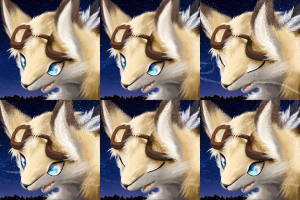




So...the fact that Theo's also a common dragon, and very obviously not quadruped most of the time, raises a very pertinent question - can all Luceiry common dragons shapeshift, into a more bipedal form like Theo usually is? Or is this Theo-exclusive, with him being your mascoty character?






Comments