
 FA+
FA+ Shop
Shop
327
Views
Views
6
Favorites
Favorites
Category
Artwork (Traditional) / Abstract
Species Leopard
Size 819 x 1280
File Size 331.6 kB
Report this content
More from Keida




Listed in Folders


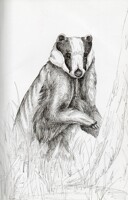
Spirit Guide of the day is Leopard! Pay close attention to your senses and trust yourself as your intuition will be stronger in the coming time. Dreams or visions may come to you more acutely. Do not reveal too much of your goals ahead of time, for releasing the thought may interfere with finishing the task. Take time to pace yourself with times of play and relaxation while keeping yourself steadily moving towards your goal. This is an important time to show your passions as well as to get some time out in nature alone to recenter yourself. The Leopard guide is known for it's connection to realizing one's own power and how to use it. The leopard shows how we have the skills to do many different tasks and all it takes is knowing how and when to utilize those wide-ranging skills. This spirit guide does not need fanfare and meetings to complete a goal, but, rather, silent persistence to reach the intended end. Leopard spirit guides are often cautioned to not confront a situation head-on, but to wait until the proper moment and angle to attack the situation. Many of the mythologies and meanings of the Leopard can be cross referenced to those of the Panther and Jaguar guides. People who connect with Leopard often have an air of mystery about them as they silently work for their goals. These individuals are considerate partners and romantic lovers. Leopard souls are naturally gifted with an awareness of their own inner realm with the ability to sense and understand them in others. These sensitive people are tactile to the point of reacting negatively to strong touch or frustrating people.
Leopards, Panthera Pardus, are carnivorous mammals belonging to the Big Cat family which also includes lions, jaguars, and tigers. They are often included in the Panther description that includes Jaguars and, sometimes, cougars. Leopards can weigh as much as 140 pounds and stand up to 28 inches tall at the shoulder. Leopards can be found throughout Africa and Asia. They are able to adapt to a range of environments from high mountains to rain forests or deserts. These creatures require only a rocky terrain and a range of thick vegetation or brush to live and hunt in. Resting during the day, they can be found in caves, bushes, or high up in trees. They are the most arboreal, or tree-dwelling, of all large cats with long tails that help them to balance on branches. Leopards even retain the ability to go without water for up to ten days by receiving the liquid they need from their food. While slightly smaller than some of the other Big Cats, Leopards are known for their incredible stealth. A range of unpredictable attack methods enables them to sneak up on prey including dropping straight out of trees onto prey, stalking near waterholes, or slinking along through the grass. They have the most unpredictable hunting pattern of most cats. The powerful Leopard can run as fast as 36 mph, jump ten feet straight up into the air, leap 20 feet forward in a single bound, and even are known as powerful swimmers. While they do not swim as much as tigers, they are quite aquatic. These powerful felines can carry a carcass larger and heavier than themselves up to 50 feet into the branches of a tree. They will often carry their prey into trees in order to keep their food from thefts by other predators or scavengers. The diet of a Leopard consists of any meat they can find: antelope, warthogs, snakes, rodents, monkeys, large birds, fish, baboons, and more. They rely on their vision, hearing, and whiskers to hunt over their sense of smell. Leopards are known for attacking their prey from behind. These are solitary creatures not known for socializing and when breeding season occurs, it can be a dangerous event. Leopards will follow pheromones until they find a mate and the male often follows the female for days until she is ready. The female will create a den in caves, openings in bushes, or burrows in order to give birth to a litter of two or three babies called cubs. Born blind, the cubs are attended continually for the first few days. However, the female must hunt and will sometimes leave them for several days once they are older in order to find food. Around three months old, the cubs will begin to join their mother on hunts in order to learning their skills. At 12 to 18 months old, these cubs will begin to leave their mother, although they will not be mature enough to breed until two or three years of age. These felines are one of the few big cats that do not possess the ability to roar, rather giving a gruff bark type of sound. The white blotches on their tail tips and ears are used to communicate with others when stalking through tall grasses.
Leopards, Panthera Pardus, are carnivorous mammals belonging to the Big Cat family which also includes lions, jaguars, and tigers. They are often included in the Panther description that includes Jaguars and, sometimes, cougars. Leopards can weigh as much as 140 pounds and stand up to 28 inches tall at the shoulder. Leopards can be found throughout Africa and Asia. They are able to adapt to a range of environments from high mountains to rain forests or deserts. These creatures require only a rocky terrain and a range of thick vegetation or brush to live and hunt in. Resting during the day, they can be found in caves, bushes, or high up in trees. They are the most arboreal, or tree-dwelling, of all large cats with long tails that help them to balance on branches. Leopards even retain the ability to go without water for up to ten days by receiving the liquid they need from their food. While slightly smaller than some of the other Big Cats, Leopards are known for their incredible stealth. A range of unpredictable attack methods enables them to sneak up on prey including dropping straight out of trees onto prey, stalking near waterholes, or slinking along through the grass. They have the most unpredictable hunting pattern of most cats. The powerful Leopard can run as fast as 36 mph, jump ten feet straight up into the air, leap 20 feet forward in a single bound, and even are known as powerful swimmers. While they do not swim as much as tigers, they are quite aquatic. These powerful felines can carry a carcass larger and heavier than themselves up to 50 feet into the branches of a tree. They will often carry their prey into trees in order to keep their food from thefts by other predators or scavengers. The diet of a Leopard consists of any meat they can find: antelope, warthogs, snakes, rodents, monkeys, large birds, fish, baboons, and more. They rely on their vision, hearing, and whiskers to hunt over their sense of smell. Leopards are known for attacking their prey from behind. These are solitary creatures not known for socializing and when breeding season occurs, it can be a dangerous event. Leopards will follow pheromones until they find a mate and the male often follows the female for days until she is ready. The female will create a den in caves, openings in bushes, or burrows in order to give birth to a litter of two or three babies called cubs. Born blind, the cubs are attended continually for the first few days. However, the female must hunt and will sometimes leave them for several days once they are older in order to find food. Around three months old, the cubs will begin to join their mother on hunts in order to learning their skills. At 12 to 18 months old, these cubs will begin to leave their mother, although they will not be mature enough to breed until two or three years of age. These felines are one of the few big cats that do not possess the ability to roar, rather giving a gruff bark type of sound. The white blotches on their tail tips and ears are used to communicate with others when stalking through tall grasses.
Category Artwork (Traditional) / Abstract
Species Leopard
Size 819 x 1280px
File Size 331.6 kB


Comments