
 FA+
FA+ Shop
Shop
289
Views
Views
9
Favorites
Favorites
Category
Artwork (Traditional) / Animal related (non-anthro)
Species Avian (Other)
Size 819 x 1280
File Size 278 kB
Report this content
More from Keida



Listed in Folders


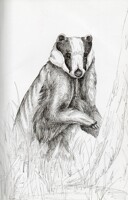
Spirit Guide of the day is Ostrich! You are protected so use this time to figure out what things you can let go of in order to accept new things. Look to exploring new avenues of knowledge by taking on a new study either on your own or through schooling. Feel free to delve into gathering new knowledge from spiritual areas as well. Know that you are grounded and balanced in your endeavors right now and aim to find practical uses for the new information you are studying. The Ostrich spirit guide is known for it's connection to remaining grounded. The Ostrich reminds us how to stay connected with the earth, calm and connected. Due to being a bird, Ostrich is a connection to flight and reaching higher realms, however, since it cannot fly the ostrich also teaches us to keep ourselves grounded and able to apply those spiritual lessons practically to this life. If the sight of an Ostrich lowering it's head comes to you, this can sometimes mean that it is time to step back and become less visible in order to protect yourself. As with any other bird that swallows stones in order to digest their food, this guide shows a sign that you need to gather all possible information before you make a decision. People who are connected with Ostrich will not tolerate threats and are known to defend themselves confidently or retreat from a situation depending on what is needed. They know when it is best to stand tall and when to stay in the background. These individuals are practice, sensible types that are always on the lookout for new information to learn in order to be able to make their rational choices. These types often have an ability to delve into spiritual realms while remaining grounded in our own.
Ostrich, Struhio Camelus, are large, omnivorous birds that can live up to 70 years in the wild. These animals are the largest birds in the world being able to reach heights of 9 feet tall and weigh as much as 290 pounds. Although flightless, they possess huge wingspans of over 6 feet across. The Ostrich is native to Africa and could once be found throughout Asia, the Arabian Peninsula, and Africa, but has been hunted down to living primarily in Sub-Saharan Africa. Related to the Emu, there are five distinct subspecies of Ostrich that are similar but vary in size and color. They are the Red-necked or North African Ostrich, Somali Ostrich, South African or Southern Ostrich, and the Masai Ostrich. All species of Ostrich prefer hotter, open landscapes to live in. These animals possess a pair of unique, long legs with backward bending knees that enable strong kicks and powerful running. They have been known to reach speeds of 42 mph. The Ostrich is also the only bird to have only two toes on each feet rather than the usual three or four toes. These specially adapted legs are powerful enough that their kick is fatal to most mammals. The diet of an Ostrich consists of wide range of both meats and vegetation. Locusts, snakes, rodents, and lizards are all on the menu, although, an Ostrich will usually prefer the plant diet of roots, leaves, and seeds. Like some other birds, an Ostrich also will eat sand and pebbles that help to grind up food within a small pouch called a Gizzard where food is ripped and crushed before proceeding to the stomach. Although an Ostrich will drink when it comes across a watering hole, these birds actually don't need to drink water at all since they receive all the water they need from the plants they consume. Groups of Ostriches are called herds or flocks and usually consist of a dominant male overseeing his flock of females and their young. At times, a flock will have a dominant male and female pair. These groups can be as few as 10 or as large as 100 individuals. Males are often called roosters or cocks while females are called hens. When breeding season comes around, lone males will often wandering through other herds looking for females. The dominant males, however, will protect their hens. Courtship to attract a female occurs with a male spreading their wings low and wide with a deep bow of their head and bodies. The pale flesh of their shins, neck, and beak will flush a bright red. Females will sometimes gain a silvery twinges to their feathers when ready to mate. In a herd, the dominant male will build a large communal nest called a dump nest which is around 10 feet wide and can fit as many as 20 eggs. These eggs are the largest bird eggs in the world reaching 6 inches in diameter and weighing up to 3 pounds. Both males and females will sit on the eggs to incubate them until they hatch approximately 45 days later. The ostrich babies are also the largest bird babies in the world. When they hatch, they are already as big as chickens. Male and female ostrich will also raise their young together, teaching them how to feed and survive. When attacked, the male ostrich will attempt to lure away the predator while the female runs to hide the babies. Ostriches will reach near to full growth around 6 months, but won't reach maturity until 3 or 4 years old.
Ostrich, Struhio Camelus, are large, omnivorous birds that can live up to 70 years in the wild. These animals are the largest birds in the world being able to reach heights of 9 feet tall and weigh as much as 290 pounds. Although flightless, they possess huge wingspans of over 6 feet across. The Ostrich is native to Africa and could once be found throughout Asia, the Arabian Peninsula, and Africa, but has been hunted down to living primarily in Sub-Saharan Africa. Related to the Emu, there are five distinct subspecies of Ostrich that are similar but vary in size and color. They are the Red-necked or North African Ostrich, Somali Ostrich, South African or Southern Ostrich, and the Masai Ostrich. All species of Ostrich prefer hotter, open landscapes to live in. These animals possess a pair of unique, long legs with backward bending knees that enable strong kicks and powerful running. They have been known to reach speeds of 42 mph. The Ostrich is also the only bird to have only two toes on each feet rather than the usual three or four toes. These specially adapted legs are powerful enough that their kick is fatal to most mammals. The diet of an Ostrich consists of wide range of both meats and vegetation. Locusts, snakes, rodents, and lizards are all on the menu, although, an Ostrich will usually prefer the plant diet of roots, leaves, and seeds. Like some other birds, an Ostrich also will eat sand and pebbles that help to grind up food within a small pouch called a Gizzard where food is ripped and crushed before proceeding to the stomach. Although an Ostrich will drink when it comes across a watering hole, these birds actually don't need to drink water at all since they receive all the water they need from the plants they consume. Groups of Ostriches are called herds or flocks and usually consist of a dominant male overseeing his flock of females and their young. At times, a flock will have a dominant male and female pair. These groups can be as few as 10 or as large as 100 individuals. Males are often called roosters or cocks while females are called hens. When breeding season comes around, lone males will often wandering through other herds looking for females. The dominant males, however, will protect their hens. Courtship to attract a female occurs with a male spreading their wings low and wide with a deep bow of their head and bodies. The pale flesh of their shins, neck, and beak will flush a bright red. Females will sometimes gain a silvery twinges to their feathers when ready to mate. In a herd, the dominant male will build a large communal nest called a dump nest which is around 10 feet wide and can fit as many as 20 eggs. These eggs are the largest bird eggs in the world reaching 6 inches in diameter and weighing up to 3 pounds. Both males and females will sit on the eggs to incubate them until they hatch approximately 45 days later. The ostrich babies are also the largest bird babies in the world. When they hatch, they are already as big as chickens. Male and female ostrich will also raise their young together, teaching them how to feed and survive. When attacked, the male ostrich will attempt to lure away the predator while the female runs to hide the babies. Ostriches will reach near to full growth around 6 months, but won't reach maturity until 3 or 4 years old.
Category Artwork (Traditional) / Animal related (non-anthro)
Species Avian (Other)
Size 819 x 1280px
File Size 278 kB

Comments