
 FA+
FA+ Shop
Shop
409
Views
Views
11
Favorites
Favorites
Category
Artwork (Traditional) / All
Species Cervine (Other)
Size 812 x 1280
File Size 189.9 kB
Report this content
More from Keida




Listed in Folders

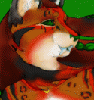
Spirit Guide of the day is Deer! Step past the negative experiences you may have been going through and strive for safe, nurturing environments and friends. It is important to pay attention to your gut instincts right now and remember to be gentle with others as well as yourself. An important and exciting adventure is upon you now so be willing to look at the various opportunities that will be opening up for you. You have a time of plenty ahead of you even if you may have had a rough time getting there. Even if you don't have a clear goal in mind, enjoy the journey rather than the end goal. The Deer guide is known for it's connection with innocence, gentleness, and the soft coaxing of adventure. Research into specific species is important for Deer since Elk, Caribou, and Moose are all related but hold specific meanings for each one. Information for Elk and Moose can be found within the Daily Totems album. The origin of the name Deer comes from multiple sources such as the Anglo Saxon word "Deor" which was a general word for animals. It can also be traced to the Sanskrit word "Mriga" meaning wild animal. The history of humans and deer have always interwoven. Many stories exist of deer luring hunters deep into the forests such as the tale of Sir Gawain from King Arthur's Knights who was lured by a white deer. The White deer is often considered to be a strong symbol and an incredible blessing to whoever sees it. Buddhism also holds deer as a central religious symbol and depicts Buddha alongside deer often. The deer represents innocence and the return to the wild. In Roman mythology, Diana was the goddess of the hunt, the moon, and the wild animals. She holds deer as sacred animals and is frequently depicted with a stag or deer alongside her. Antlers and horns are always seen as antennae to the divine, physical symbols of higher senses and abilities. As deer shed and regrow their antlers, this teaches us to be aware of new opportunities coming to us. When you see a deer in the wild, count their tines for it may connect with numerology to help show you the significance of the sighting. Deer are also a strong symbol for the connection of mother and child. It reminds us of the importance of bonding within the first few months of birth to help with the physical and mental growth of the child. Deer possess acute abilities for perception and allow us to detect subtle movements, appearances, and empathic abilities. The deer totem reminds us to be gentle and soft while able to sense what we or others may need. Remember to work towards your goals with plenty of gaps for rest and recharging. This may also include adjusting your diet to multiple small, healthy meals throughout the day rather than three large, heavy meals. People who connect with Deer hold both aspects of masculine and feminine energy within themselves, relating most closely to those associated with their own gender. These outdoor individuals love to spent time recharging in the forests and grassy areas. These types are often empathic, sensitive, and intuitive with the ability to sense the feelings of others.
Deer, Cervidae, are herbivorous mammals that are a member of the cloven-hoofed ungulate family and live up to 12 years in the wild. There are 47 species of deer including caribou, moose, and wapiti. The illustration above is of the Roe Deer. The largest deer, the Irish Deer, lived around 11,000 years ago and could reach 7 feet in height from hooves to shoulder with antlers spanning 12 feet wide. Today, the largest living deer is the Moose which grows to 6.5 feet and weights just under 2,000lbs. The smallest Deer is the Southern Pudu which only weighs 20lbs and grows to around 14 inches tall from hoof to shoulder. These animals are found all over the world except for Australia and Antarctica. However, Africa only has one deer known as the Barbary Red Deer. Deer live in a variety of habitats from wetlands and grasslands to scrublands, mountains, and rain forests. One common trait to all Deer would be their antlers. Every species grows these bony skull extensions except for the Chinese Water Deer which, instead, grows large canine teeth used to attract mates. Caribou are the only species of deer where the antlers grow on both genders. Otherwise, only male deer will grow these impressive antlers. Antlers grow on boney structures called Pedicels that support the antlers which grow a blood and nerve-filled substance called Velvet over top. This velvet helps the antlers to grow and, when fully grown, dies and is scraped off by the deer scrubbing against trees or rocks. These antlers are used to fight other males during breeding season or to scrape bark from trees during lean winter foraging. Antlers are shed once a year after the breeding season due to a drop in testosterone levels. Antlers can be short spikes such as those seen in Muntjacs or broad, branched structures such as those seen in Moose. The Diet of a deer consists of small shrubs, grass, and leaves. They are known to dig under deep snows in the winter in search of grasses or roots and will resort to eating twigs if necessary. In urban areas, deer will often venture into yards and gardens or even trash cans in search for food. Deer also have digestive systems similar to cows where they possess a main stomach and three "false stomachs" and chew their food into material called "cud". They are most active during the day with peak levels of activity during dusk and dawn. These social animals travel in groups called herds with a dominant male preceding over them. Certain species will have different social structures, however. Some species will separate into herds according to gender while others will have a herd of females guarded over by a male herd. Reproduction occurs differently depending on species and location although it is usually during late autumn or early winter. This way the young are born during warmer weathers with an abundance of food to sustain them. A few deer species such as the European Roe Deer are monogamous and will make pair bonds with one other deer. Although this is not usual for most species of deer. While deer have a gestation period of between 180 to 240 days, larger deer will carry their young for longer. One to three young, or fawns, are born to a mother. Fawns in many species are often born with white spots that help to hide them from predators. They are hidden much of their young life even though they can walk within a half hour of being born and the mother will even keep them hidden from other family members until they are more developed. Fawns are weaned between two and fives months old. Male deer are often known as bucks while larger males are known as stags. A female is referred to as a doe or a hind. These incredible animals are able to jump up to 10 feet in the air. Their large eye's located on either side of their head give them 310 degrees of vision in comparison to a human's 180 degrees of vision. With excellent night vision, they are easily able to see in their most actives times of dawn and dusk. Their large ears are adept at picking up sounds in their environment and warn them of danger.
Deer, Cervidae, are herbivorous mammals that are a member of the cloven-hoofed ungulate family and live up to 12 years in the wild. There are 47 species of deer including caribou, moose, and wapiti. The illustration above is of the Roe Deer. The largest deer, the Irish Deer, lived around 11,000 years ago and could reach 7 feet in height from hooves to shoulder with antlers spanning 12 feet wide. Today, the largest living deer is the Moose which grows to 6.5 feet and weights just under 2,000lbs. The smallest Deer is the Southern Pudu which only weighs 20lbs and grows to around 14 inches tall from hoof to shoulder. These animals are found all over the world except for Australia and Antarctica. However, Africa only has one deer known as the Barbary Red Deer. Deer live in a variety of habitats from wetlands and grasslands to scrublands, mountains, and rain forests. One common trait to all Deer would be their antlers. Every species grows these bony skull extensions except for the Chinese Water Deer which, instead, grows large canine teeth used to attract mates. Caribou are the only species of deer where the antlers grow on both genders. Otherwise, only male deer will grow these impressive antlers. Antlers grow on boney structures called Pedicels that support the antlers which grow a blood and nerve-filled substance called Velvet over top. This velvet helps the antlers to grow and, when fully grown, dies and is scraped off by the deer scrubbing against trees or rocks. These antlers are used to fight other males during breeding season or to scrape bark from trees during lean winter foraging. Antlers are shed once a year after the breeding season due to a drop in testosterone levels. Antlers can be short spikes such as those seen in Muntjacs or broad, branched structures such as those seen in Moose. The Diet of a deer consists of small shrubs, grass, and leaves. They are known to dig under deep snows in the winter in search of grasses or roots and will resort to eating twigs if necessary. In urban areas, deer will often venture into yards and gardens or even trash cans in search for food. Deer also have digestive systems similar to cows where they possess a main stomach and three "false stomachs" and chew their food into material called "cud". They are most active during the day with peak levels of activity during dusk and dawn. These social animals travel in groups called herds with a dominant male preceding over them. Certain species will have different social structures, however. Some species will separate into herds according to gender while others will have a herd of females guarded over by a male herd. Reproduction occurs differently depending on species and location although it is usually during late autumn or early winter. This way the young are born during warmer weathers with an abundance of food to sustain them. A few deer species such as the European Roe Deer are monogamous and will make pair bonds with one other deer. Although this is not usual for most species of deer. While deer have a gestation period of between 180 to 240 days, larger deer will carry their young for longer. One to three young, or fawns, are born to a mother. Fawns in many species are often born with white spots that help to hide them from predators. They are hidden much of their young life even though they can walk within a half hour of being born and the mother will even keep them hidden from other family members until they are more developed. Fawns are weaned between two and fives months old. Male deer are often known as bucks while larger males are known as stags. A female is referred to as a doe or a hind. These incredible animals are able to jump up to 10 feet in the air. Their large eye's located on either side of their head give them 310 degrees of vision in comparison to a human's 180 degrees of vision. With excellent night vision, they are easily able to see in their most actives times of dawn and dusk. Their large ears are adept at picking up sounds in their environment and warn them of danger.
Category Artwork (Traditional) / All
Species Cervine (Other)
Size 812 x 1280px
File Size 189.9 kB

Comments