
 FA+
FA+ Shop
Shop
1664
Views
Views
81
Favorites
Favorites
Category
Artwork (Traditional) / All
Species Unspecified / Any
Size 1000 x 757
File Size 521.2 kB
Report this content
More from G. Wolfe


Listed in Folders

Vickers Valiant BK.I Crew, No. 148 Sqn, No. 3 Group RAF, March AFB, Fall 1958
Line up of Valiant Crew participating in annual SAC Bombing and Navigation Competition at March AFB, CA in October 1958. The competition involved making three simulated atomic bomb attacks on a single night on San Jose, CA and Boise and Batte, MT followed by an 800-miles cross-country route using astro navigation.
Following RAF Bomber Command's own competition held in June 1957, the command was invited to take part in SAC competition held in Pinecastle, FL in October 1957. Although in general RAF team's performance was average, team led by S/L R.N.Payne of 214 Sqn. finished at exceedingly good 11th place out of 90 teams - 66 B-47s, 10 B-52s, 10 B-36s, 2 Vulcans and 2 Valiants - considering that the British crews were battling in 'enemy' territory where the opposition teams had practised the same exercise over and knew the territory well.
For the 1958 competition Bomber Command sent a detachment of 6 Valiant BK.I - XD819, XD859, XD861, XD873, XD874 and XD875, all of which departed for America on 10th September. This time, out of 41 competing wings, RAF 'B' team gained 7th place in the B-52 class, in the combined bombing and navigation. Crew led by S/L R.W.Richardson of 148 Sqn. Achieved 9th place out of 164 competing crews, W/Cdr S.Baker of 138 Sqn. came 12th and W/Cdr F.C.D.Wright of 148 Sqn. 30th, a remarkable achievement with odds stacked against them.
What was particularly satisfying was that UK team's serviceability record for the competition was much better than American teams, with no airframe or engine faults whatsoever. USAF inspection of RAF Valiants during the competition brought to America's attention the knowledge that the UK could still produce very potent warplanes.
You see our hero Charles Griffith, now a 38 years old Flight Lieutenant, is at it again. After the war, in which he completed two full bomber tour with a DSM and a DFM, he returned to his family business back in Caernarvonshire. However, finding his skill set now completely irrelevant - turns out innkeeping does not involve searching the night sky for nightfighter or maintaining Browning machine guns - and feeling unfulfilled, he embarks for his third helping on RAF Bomber Command, this time applying for commission, taking course in Air Electronics and trying not to end as another air gunner. which, to his surprise, landed him in the cockpit of Britain's first V-bomber, Vickers Valiant. Along with his former crewmate and air-bomber-turned-navigator-radar, F/L Charles Griffith embarks on an adventurous ride of strategic nuclear deterrence and bombing Egyptian airfields while the whole world - except France but including Canada - frown upon them.
Line up of Valiant Crew participating in annual SAC Bombing and Navigation Competition at March AFB, CA in October 1958. The competition involved making three simulated atomic bomb attacks on a single night on San Jose, CA and Boise and Batte, MT followed by an 800-miles cross-country route using astro navigation.
Following RAF Bomber Command's own competition held in June 1957, the command was invited to take part in SAC competition held in Pinecastle, FL in October 1957. Although in general RAF team's performance was average, team led by S/L R.N.Payne of 214 Sqn. finished at exceedingly good 11th place out of 90 teams - 66 B-47s, 10 B-52s, 10 B-36s, 2 Vulcans and 2 Valiants - considering that the British crews were battling in 'enemy' territory where the opposition teams had practised the same exercise over and knew the territory well.
For the 1958 competition Bomber Command sent a detachment of 6 Valiant BK.I - XD819, XD859, XD861, XD873, XD874 and XD875, all of which departed for America on 10th September. This time, out of 41 competing wings, RAF 'B' team gained 7th place in the B-52 class, in the combined bombing and navigation. Crew led by S/L R.W.Richardson of 148 Sqn. Achieved 9th place out of 164 competing crews, W/Cdr S.Baker of 138 Sqn. came 12th and W/Cdr F.C.D.Wright of 148 Sqn. 30th, a remarkable achievement with odds stacked against them.
What was particularly satisfying was that UK team's serviceability record for the competition was much better than American teams, with no airframe or engine faults whatsoever. USAF inspection of RAF Valiants during the competition brought to America's attention the knowledge that the UK could still produce very potent warplanes.
You see our hero Charles Griffith, now a 38 years old Flight Lieutenant, is at it again. After the war, in which he completed two full bomber tour with a DSM and a DFM, he returned to his family business back in Caernarvonshire. However, finding his skill set now completely irrelevant - turns out innkeeping does not involve searching the night sky for nightfighter or maintaining Browning machine guns - and feeling unfulfilled, he embarks for his third helping on RAF Bomber Command, this time applying for commission, taking course in Air Electronics and trying not to end as another air gunner. which, to his surprise, landed him in the cockpit of Britain's first V-bomber, Vickers Valiant. Along with his former crewmate and air-bomber-turned-navigator-radar, F/L Charles Griffith embarks on an adventurous ride of strategic nuclear deterrence and bombing Egyptian airfields while the whole world - except France but including Canada - frown upon them.
Category Artwork (Traditional) / All
Species Unspecified / Any
Size 1000 x 757px
File Size 521.2 kB




https://en.wikipedia.org/wiki/GMF_AeroAsia
Sent my proposal, still waiting for reply
Sent my proposal, still waiting for reply



The B-36 was a load of garbage that was well outdated before the DOD was sold a load of trash by a retired general who canceled the YB-49 (superior in every way) just secure himself a job with Convair.
Vickers made a wonderful bomber for the times, in a class with the Boing B-47. The propeller was dead and Vickers knew it.
Vickers made a wonderful bomber for the times, in a class with the Boing B-47. The propeller was dead and Vickers knew it.
Thanks B!
Indeed many V-bombers captains were veterans of world war 2 reaching their late 30's, as experience and maturity are seen as desirable qualities in men whose sole function is to nuke Russia. To be a Valiant captain, as a matter of fact, one must acquire at least 1,750 flying hours and at least a tour flying EE Canberra.
Even with all its advances, V-bombers actually still use Mk.X version of WW2 era H2S radar. Along with G4 compass and newer Green Satin doppler navigation radar developed much later they feed flight data to V-bombers Navigation and Bombing Computer (NBC) which formed Navigation and Bombing System (NBS) used up until Victor's retirement in 1993
I see the lack of Valiant art on FA, so i try to rectify that problem
Indeed many V-bombers captains were veterans of world war 2 reaching their late 30's, as experience and maturity are seen as desirable qualities in men whose sole function is to nuke Russia. To be a Valiant captain, as a matter of fact, one must acquire at least 1,750 flying hours and at least a tour flying EE Canberra.
Even with all its advances, V-bombers actually still use Mk.X version of WW2 era H2S radar. Along with G4 compass and newer Green Satin doppler navigation radar developed much later they feed flight data to V-bombers Navigation and Bombing Computer (NBC) which formed Navigation and Bombing System (NBS) used up until Victor's retirement in 1993
I see the lack of Valiant art on FA, so i try to rectify that problem
Wonder no more! while researching this picture i came across biographical site of F/L Roy Mather, one of the first Valiant pilots and the other Valiant pilot who compete alongside S/L R.N.Payne in the 1957 SAC Bomb Comp - flying XD859. Looks like he got lots of experiences up his sleeve; A Lancaster tour in WW2, Berlin airlift, flying Boeing Washington, Canberra and finally topped his career in a Valiant
You can start right here: http://www.vickersvaliant.com/home.html
A page of July 1958 edition of Flight Global, recounting 1957 Bomb Comp: https://www.flightglobal.com/Flight.....20-%200013.PDF
And history of the Bomb Comp in general: https://www.flightglobal.com/Flight.....20-%200013.PDF
But mostly i got my info from Eric Morgan's Vickers Valiant: The first of the V-bomber published by Aerofax, very good reference book to have!
You can start right here: http://www.vickersvaliant.com/home.html
A page of July 1958 edition of Flight Global, recounting 1957 Bomb Comp: https://www.flightglobal.com/Flight.....20-%200013.PDF
And history of the Bomb Comp in general: https://www.flightglobal.com/Flight.....20-%200013.PDF
But mostly i got my info from Eric Morgan's Vickers Valiant: The first of the V-bomber published by Aerofax, very good reference book to have!


It's when you see a picture at this angle that you realise just how close to the ground the Valiant sat - it'd only take a small bump in the tarmac to scrape that landing gear bay door! Regardless, this is an awesome interpretation of an awesome aircraft, as well as the gentlemen who flew it. Thank you for your brilliant work; it really made my day. ^__^
Thank you!
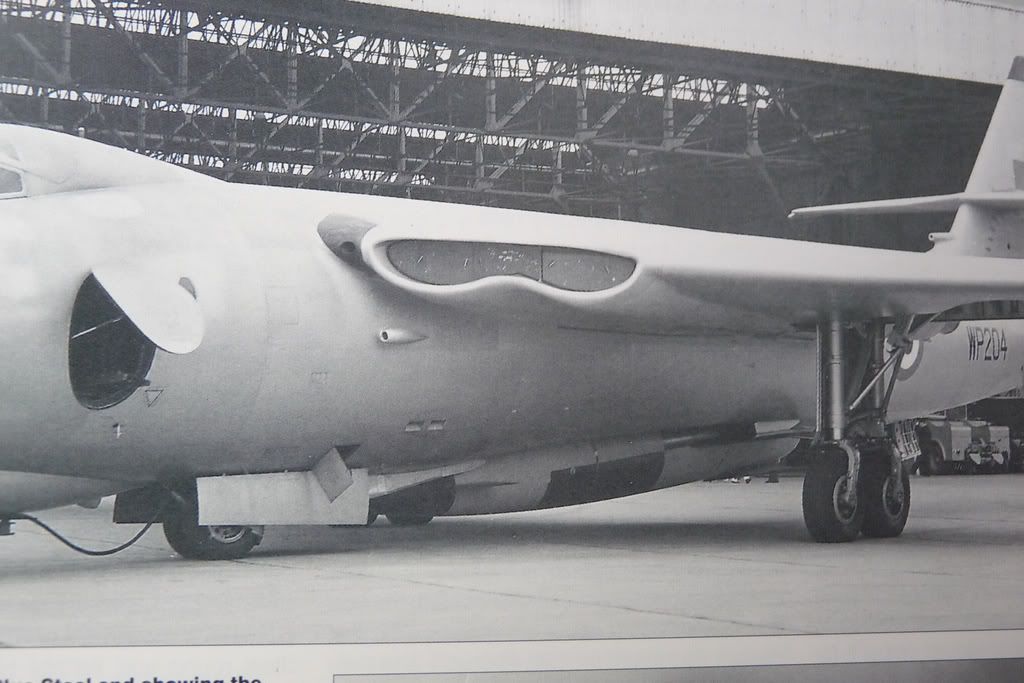
Imagine when it had to carry Bristol Pegasus 3 installation http://www.mediastorehouse.com/p/16.....99-9895847.jpg or prototype Blue Steel http://i752.photobucket.com/albums/.....8.jpg~original
Talk about low rider!
Imagine when it had to carry Bristol Pegasus 3 installation http://www.mediastorehouse.com/p/16.....99-9895847.jpg or prototype Blue Steel http://i752.photobucket.com/albums/.....8.jpg~original
Talk about low rider!



Comments