
 FA+
FA+ Shop
Shop
599
Views
Views
9
Favorites
Favorites
Category
Photography / Animal related (non-anthro)
Species Avian (Other)
Size 850 x 719
File Size 601.4 kB
Report this content
More from FrogsBreath


Photographed at the National Museum of Natural History. The shiny parts are the actual fossil, the matte grey areas are the reconstruction. This specimen is very likely male.
Category Photography / Animal related (non-anthro)
Species Avian (Other)
Size 850 x 719px
File Size 601.4 kB



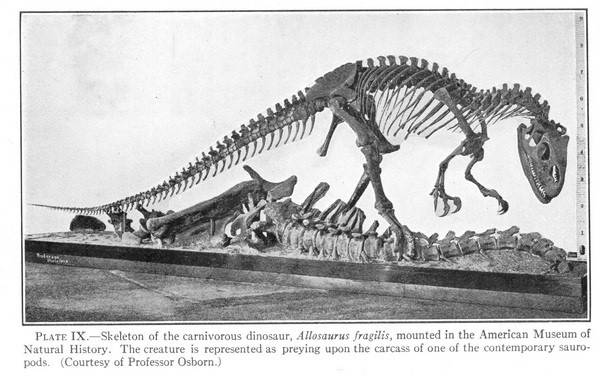
The trick is to look at the tail bones. See how in this picture the little bones sticking down from the tail bones are all about the same size close to the hip?
http://www.copyrightexpired.com/ear.....allosaurus.jpg
And in this photo (which is of a T. rex, facing right) the first few little bones are smaller and bent backwards a bit? http://pro.corbis.com/images/PG990714.jpg?size=67&uid=%7B7A0162AF-9C35-4579-A42D-69BBF877B722%7D
The theory is that, like in crocodiles, female dinosaurs had the smaller first few bones to allow the eggs to squeeze through the cloaca more easily. I checked, and the Smithsonian allosaur had same-sized tail bones, so he's probably a he.
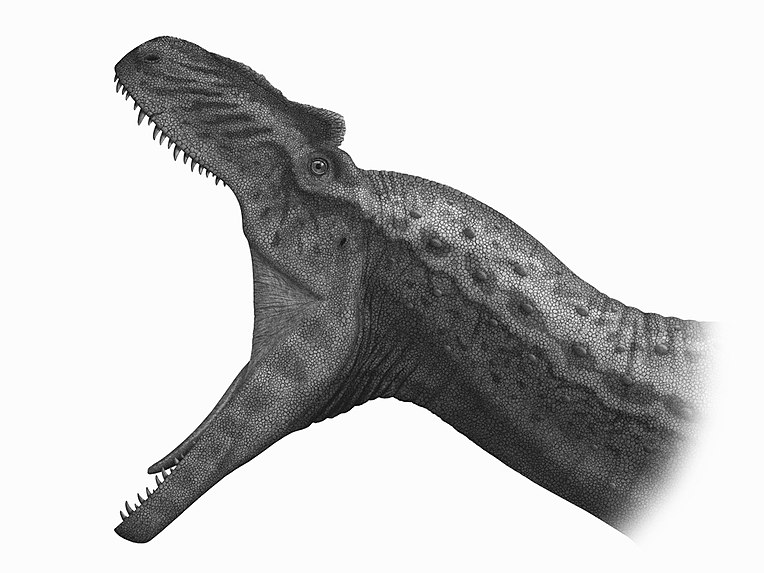
Yeah, Allosaurus had a very weak bite but strong head and neck muscles - one theory is that it opened its mouth extremely wide and sawed through the flesh with the upper jaw, like so: http://upload.wikimedia.org/wikiped....._Steveoc86.jpg

Comments