
 FA+
FA+ Shop
Shop
265
Views
Views
14
Favorites
Favorites
Category
Artwork (Digital) / All
Species Unspecified / Any
Size 1280 x 853
File Size 166.4 kB
Report this content
More from Rika_Wolf


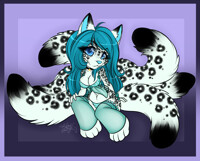


Species: Lyrian
Date of birth: 8/11/96
Height: Anthro: 7' 00" Feral: 7' 00" long
Sexual Orientation: Straight
Personal information: For as long as she could remember, Sakura has always been without a family and as such she was considered the lowest among her pride. So one day she left the pride to be on her own, which for a while was great until her fur started getting really dirty and without a pride to help clean her mane she began to feel alone, until one day while Sakura was in her feral form she came across a familiar little girl named Ebony who not only wasn't afraid of seeing a seven foot long large cat walk into view, but also walked over and started cleaning her fur. Soon Ebony and Sakura became good friends and Ebony brought her home to a rather surprised Kindel, asking him if she could keep Sakura before Sakura decided to change into her anthro form and surprised Ebony. Now Sakura is living in a loving home with a family and being Ebony's loyal friend (when anthro)/pet (when feral).
Sakura is © to me and
and 
Added info copied from Aimi's post of the Lyrian species.
They are called Lyrians.
"Lee-ri-ans"
LA Lyrian’s closest living relative is a lion, and though the relation is very distant, these felines mimic their manes in both their males and females as opposed to in just males. These manes are meant to protect the throat and the neck from other Lyrians’s during combat , and are thickest immediately around the throat and spine where the fur grows more densely to help cushion impacts.
The gemlike ‘stones’ upon the Lyrians’s foreheads would be more accurately described as a luminescent attachment that are biologically wired to the left hemisphere of the brain, in particular the region’s most responsible for social interactions, and the level and color range of luminescence varies depending on the individual’s mood and thoughts.
Physical appearance wise, Lyrians’s tend to follow the normal trend of species, with males on average being slightly taller than their female counterparts. Both genders however share many of the same traits, including the long, thick mane that is predominant in their species. Lyrians’s lack any sort of tail appendage, evolution seeing fit to remove them entirely in lieu of their mane’s length, which can often reach and drag upon the ground. Various styles of wearing the manes have appeared amongst the species to counter this seeming flaw in their biology, with members of certain cultural heritages choosing the braid, knot, cut, or wear their manes in dreadlocks.
Hygiene is very important, as the manes can grow so long as to pick up clumps, dirt, and in some very old, out casted specimens, even living fauna and fungi can be found tangled in the long mane tresses. The state of their manes is a very good indication of one’s social standing in the family group, or pride. If a Lyrian is higher in rank, more pride members want to participate in social grooming with him, but the lower in rank, the harder it is to find a willing participant. Out casted Lyrians suffer from health problems due to not having basic social grooming, and their bodies and manes becoming heavy with filth.
Often seen within the species as well are bandages worn around the palms and knuckles, as well as tears of varying sizes in their ears from their natural instinctive reaction to increased stress as ‘brawlers’, as it were, and rough housing gone a step to far is a none to uncommon occurrence amongst them.
The species also feature small horns on their foreheads, a genetic ‘leftover’ from centuries of evolution. Where once great antlers stood, now only stumps remain, that are averaging smaller sizes with each subsequent generation as they no longer serve a biological purpose to the species. In place of the horns, long, sensitive whiskers have grown, one on each side of the face replacing the normal several short whiskers seen on most felines.
Art is too
Date of birth: 8/11/96
Height: Anthro: 7' 00" Feral: 7' 00" long
Sexual Orientation: Straight
Personal information: For as long as she could remember, Sakura has always been without a family and as such she was considered the lowest among her pride. So one day she left the pride to be on her own, which for a while was great until her fur started getting really dirty and without a pride to help clean her mane she began to feel alone, until one day while Sakura was in her feral form she came across a familiar little girl named Ebony who not only wasn't afraid of seeing a seven foot long large cat walk into view, but also walked over and started cleaning her fur. Soon Ebony and Sakura became good friends and Ebony brought her home to a rather surprised Kindel, asking him if she could keep Sakura before Sakura decided to change into her anthro form and surprised Ebony. Now Sakura is living in a loving home with a family and being Ebony's loyal friend (when anthro)/pet (when feral).
Sakura is © to me
 and
and 
Added info copied from Aimi's post of the Lyrian species.
They are called Lyrians.
"Lee-ri-ans"
LA Lyrian’s closest living relative is a lion, and though the relation is very distant, these felines mimic their manes in both their males and females as opposed to in just males. These manes are meant to protect the throat and the neck from other Lyrians’s during combat , and are thickest immediately around the throat and spine where the fur grows more densely to help cushion impacts.
The gemlike ‘stones’ upon the Lyrians’s foreheads would be more accurately described as a luminescent attachment that are biologically wired to the left hemisphere of the brain, in particular the region’s most responsible for social interactions, and the level and color range of luminescence varies depending on the individual’s mood and thoughts.
Physical appearance wise, Lyrians’s tend to follow the normal trend of species, with males on average being slightly taller than their female counterparts. Both genders however share many of the same traits, including the long, thick mane that is predominant in their species. Lyrians’s lack any sort of tail appendage, evolution seeing fit to remove them entirely in lieu of their mane’s length, which can often reach and drag upon the ground. Various styles of wearing the manes have appeared amongst the species to counter this seeming flaw in their biology, with members of certain cultural heritages choosing the braid, knot, cut, or wear their manes in dreadlocks.
Hygiene is very important, as the manes can grow so long as to pick up clumps, dirt, and in some very old, out casted specimens, even living fauna and fungi can be found tangled in the long mane tresses. The state of their manes is a very good indication of one’s social standing in the family group, or pride. If a Lyrian is higher in rank, more pride members want to participate in social grooming with him, but the lower in rank, the harder it is to find a willing participant. Out casted Lyrians suffer from health problems due to not having basic social grooming, and their bodies and manes becoming heavy with filth.
Often seen within the species as well are bandages worn around the palms and knuckles, as well as tears of varying sizes in their ears from their natural instinctive reaction to increased stress as ‘brawlers’, as it were, and rough housing gone a step to far is a none to uncommon occurrence amongst them.
The species also feature small horns on their foreheads, a genetic ‘leftover’ from centuries of evolution. Where once great antlers stood, now only stumps remain, that are averaging smaller sizes with each subsequent generation as they no longer serve a biological purpose to the species. In place of the horns, long, sensitive whiskers have grown, one on each side of the face replacing the normal several short whiskers seen on most felines.
Art is too

Category Artwork (Digital) / All
Species Unspecified / Any
Size 1280 x 853px
File Size 166.4 kB



Comments